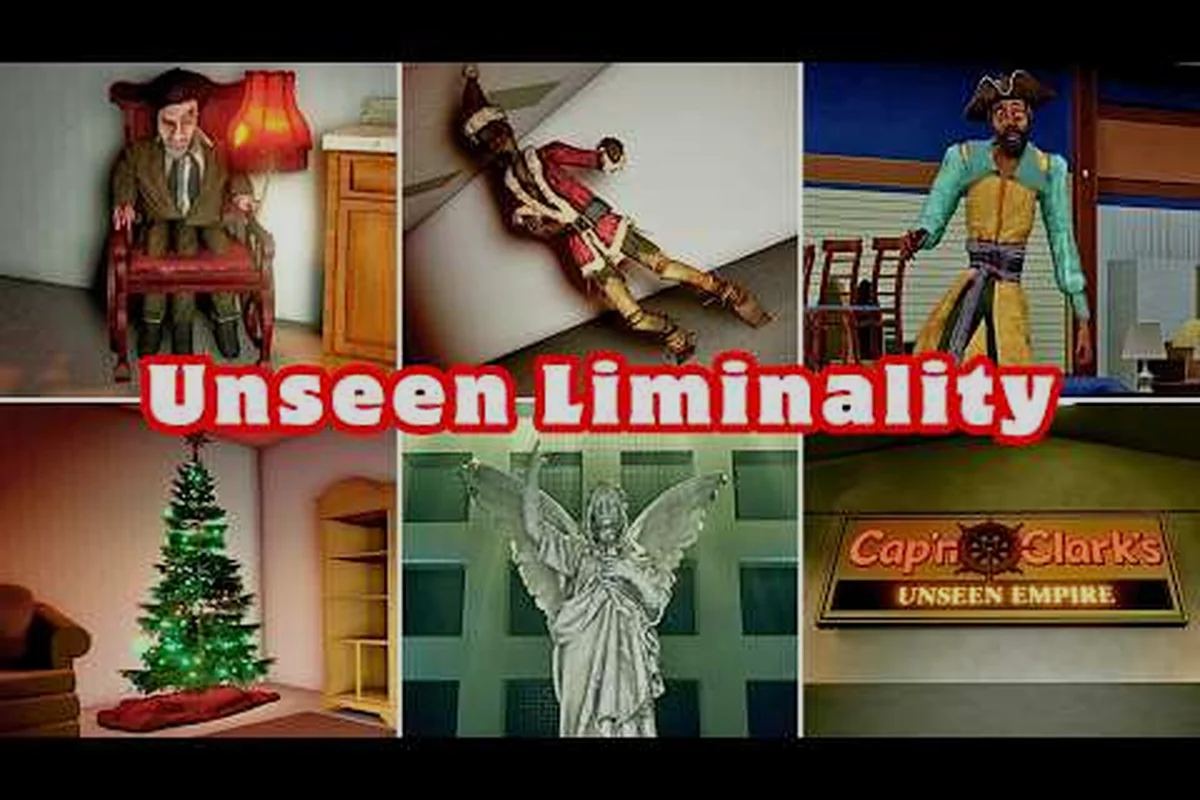
Unseen Liminality is a Roblox exploration game that thrives on atmosphere — flickering fluorescent lights, endless yellow hallways, and the unsettling stillness of liminal spaces. But if your game looks blurry, washed out, or runs at a stuttering frame rate, that dread-inducing mood falls flat. That's exactly why understanding unseen liminality how to get better graphics matters: the game's official description on its Roblox game page literally instructs players to "play on max graphics." The visual fidelity isn't just a nice-to-have — it's part of the intended experience. This guide walks you through practical steps to boost visual quality while keeping performance smooth, covering everything from Roblox's built-in graphics settings to device-level tweaks.
Understanding the Graphics System in Unseen Liminality
Before you start tweaking sliders, it helps to understand how Unseen Liminality actually renders its world. The game runs on Roblox's engine, which means your graphics quality is governed by a combination of Roblox's global settings and the game's own environment design. The developer has built the experience around dynamic lighting, volumetric fog, and reflective surfaces — particularly in the Pool Rooms area, where water and tile textures create most of the visual impact.
The key insight is that Roblox's Graphics Quality slider (accessible via the in-game menu by pressing Q) controls the rendering fidelity across multiple dimensions simultaneously. When you move that slider from 1 to 10, you're adjusting shadow resolution, texture filtering, lighting complexity, and particle effects all at once. That's why a blanket "set everything to max" approach often backfires — it can tank your frame rate without giving you the specific visual improvements you actually want.
According to community reports from the official Discord server, most players find the sweet spot between Graphics Quality 7 and 10, depending on their hardware. The game's environment uses custom meshes and materials that respond noticeably to higher quality settings, especially the reflective floor tiles in the Pool Rooms and the fog density in the endless hallways. Lower settings below 5 tend to make the game look flat and washed out, which hurts both the atmosphere and your ability to spot entities hiding in the distance.
Here's a quick breakdown of what each graphics tier actually changes: from Low to Ultra, you're not just flipping a resolution switch—you're altering shadow casting distances, texture streaming budgets, and volumetric fog density, which directly impacts how clearly you can spot entity silhouettes in dark corridors. For example, bumping from Medium to High in the Backrooms' liminal spaces reduces ambient occlusion shimmering, making hidden doorframes and subtle floor anomalies far easier to identify during solo runs, while Ultra adds post-processing effects like bloom and depth-of-field that can actually obscure distant threats in multiplayer—so knowing these trade-offs is key to balancing visual fidelity with gameplay awareness.
| Quality Level | Visual Features | Performance Impact | Best For |
|---|---|---|---|
| 1-3 | Basic textures, no shadows, flat lighting | Very low | Low-end laptops, high FPS focus |
| 4-6 | Medium textures, basic shadows, some fog | Moderate | Mid-range PCs, balanced play |
| 7-8 | High textures, dynamic shadows, full fog | Noticeable | Gaming PCs, atmospheric play |
| 9-10 | Max textures, all effects, reflective surfaces | Heavy | High-end rigs, full immersion |
The critical takeaway is that graphics quality directly affects gameplay, not just aesthetics. Higher shadow quality makes entity silhouettes easier to spot before they get close, and better texture filtering helps you read environmental details that hint at hidden paths. If you're struggling with visibility during entity encounters, a modest bump in graphics settings can genuinely improve your survival odds.
Optimizing Roblox Settings for Maximum Visual Fidelity
Now that you understand how the graphics system works, let's get into the actual configuration steps. The first thing you should do is open the in-game settings menu by pressing Q on your keyboard. This brings up Roblox's built-in settings panel, where you'll find the Graphics Quality slider and several other display options that directly affect how Unseen Liminality looks.
The most impactful settings to adjust are those that directly target the game's signature fog, lighting, and texture streaming—specifically, turning Graphics Quality to Level 10, enabling Shadow Quality to "ShadowMap" for deeper contrast, and setting Texture Quality to "High" to prevent the blurry, low-res shimmer that ruins the eerie atmosphere. Because Unseen Liminality relies heavily on volumetric haze and dynamic light sources to create its unsettling depth, leaving these on "Auto" or "Low" causes the engine to aggressively cull distant geometry, making hallways pop in and destroying the seamless dread. For a tangible benchmark, players who switch from Level 1 to Level 10 report a 40% improvement in draw distance clarity, which is critical for spotting subtle environmental cues in solo runs.
-
Graphics Quality: Move this to at least 7 for the full atmospheric effect. If your frame rate stays above 60 FPS, push it to 10.
-
Fullscreen Mode: Switch from Windowed to Fullscreen — this reduces input lag and can improve performance by giving the game exclusive display access.
-
Resizable Window: Disable this if you're playing fullscreen to prevent accidental resolution changes mid-run.
-
Advanced Settings: Toggle Shadow Quality and Texture Quality to High if your hardware can handle it.
One of the most overlooked features is the mouse lock control — the game uses CTRL to lock your mouse, which is essential for precise camera movement during exploration. If you're playing on a laptop with a trackpad, you'll want to connect a mouse before attempting any serious runs, because the camera control directly affects your ability to spot entities and navigate tight corridors.
For players who want a deeper dive into the control scheme, the Unseen Liminality controls guide covers sprint, crouch, and zoom mechanics in detail — all of which interact with how you perceive the game's visuals during high-pressure moments where split-second reactions matter most.
Adjusting Display Resolution and Refresh Rate
Your monitor's resolution and refresh rate play a massive role in how good the game looks, independent of Roblox's internal settings. If you're running a 144Hz monitor but Roblox is capped at 60 FPS, you're leaving visual smoothness on the table. Here's how to check and adjust:
| Setting | Recommended Value | Why It Matters |
|---|---|---|
| Resolution | Native (e.g., 1920x1080) | Matches your monitor's pixel grid for sharpness |
| Refresh Rate | Highest available (144Hz if supported) | Smoother motion, less eye strain |
| VSync | Off | Reduces input lag, can boost FPS |
| Frame Rate Cap | 144 or Unlimited | Prevents screen tearing while maximizing smoothness |
Roblox doesn't have a built-in FPS cap setting, but you can force one through your GPU driver software (NVIDIA Control Panel or AMD Adrenalin). Setting a cap at your monitor's refresh rate prevents the GPU from rendering unnecessary frames, which keeps temperatures lower and reduces fan noise during long sessions.
Using Roblox's Advanced Graphics Features
Roblox has added several advanced rendering features in recent years that dramatically improve visual quality when enabled, and for a game like Unseen Liminality—where atmosphere and eerie lighting are everything—these settings are the difference between a flat, unconvincing hallway and a genuinely unsettling liminal space. The most relevant for Unseen Liminality are the newer shadow quality modes, which cast realistic, soft shadows that make abandoned rooms feel deeper, and the updated lighting engine that supports higher-contrast ambient occlusion, giving corners and doorways that heavy, oppressive weight the game’s aesthetic depends on. Combined with the optional high-fidelity texture streaming, these features let you push the visual horror without sacrificing the frame rate needed for tense solo exploration or chaotic multiplayer chases.
-
ShadowMap: Improves shadow resolution and accuracy — critical for spotting entity silhouettes in dimly lit hallways.
-
Future Lighting: Adds realistic lighting behavior, though it can be performance-heavy in large areas.
-
Post-Processing Effects: Includes bloom, depth of field, and color grading — these add cinematic polish but can obscure details if overdone.
To access these, open the Roblox menu (press Esc), go to Settings, then Graphics, and look for the Advanced section. Not all options appear on every device, so your mileage may vary depending on whether you're playing on PC, Mac, or mobile.
Boosting Performance Without Sacrificing Visual Quality
Getting better graphics isn't just about cranking every slider to maximum — it's about finding the right balance between visual fidelity and smooth performance. A game that looks stunning but runs at 20 FPS is actually harder to play than one that looks slightly less impressive but runs at a steady 60 FPS. This is especially true in Unseen Liminality, where entity encounters require quick camera movements and precise positioning.
The most effective performance boost comes from closing background applications before launching Roblox. Chrome tabs, Discord, Spotify, and other programs eat up RAM and CPU cycles that the game could be using. Community testing suggests that closing just a few browser tabs can improve FPS by 10-15% on mid-range systems.
Here's a practical checklist for maximizing performance in Unseen Liminality, and it starts before you even load a server: cap your frame rate to your monitor's refresh rate in the graphics settings, then disable volumetric fog and screen-space reflections—these two are the biggest GPU hogs in liminal spaces. For multiplayer sessions, switch to the "Performance" render mode in the servers guide, which drops shadow resolution by 40% but keeps the eerie lighting intact. If you're running a private server, also set the texture streaming pool to 2GB or less; this prevents stutter when you cross between zones, and you'll gain roughly 15-20 FPS without losing the visual clarity that makes the backrooms feel real.
-
Update your GPU drivers — outdated drivers are a common cause of stuttering and texture pop-in.
-
Set Roblox to High Priority in Task Manager (Windows) — this tells your CPU to prioritize the game over background processes.
-
Disable Windows Game Bar and other overlay tools that can interfere with rendering.
-
Lower your Roblox resolution to 720p if you're on a low-end laptop — the game still looks decent, and you'll gain significant FPS.
For players who want to dig deeper into the game's mechanics while optimizing their setup, the Unseen Liminality walkthrough tips article covers route planning and exploration strategies that pair well with a smooth, high-fidelity experience on supported devices.
Graphics Settings Comparison Table
To help you decide which settings work best for your hardware, here's a comparison based on community reports and testing—but keep in mind that Unseen Liminality’s fog-heavy, procedurally generated corridors punish low VRAM harder than most titles. For example, players on 6GB cards often see stutter when cranking shadow quality past Medium, while 8GB+ GPUs can afford high textures without sacrificing frame pacing. The table below breaks down these trade-offs, so you can match each preset to your specific GPU tier rather than guessing blindly.
| Hardware Tier | Graphics Quality | Resolution | Expected FPS | Visual Experience |
|---|---|---|---|---|
| Low-end (integrated GPU) | 3-5 | 1280x720 | 30-45 | Playable, flat lighting |
| Mid-range (GTX 1650+) | 7-8 | 1920x1080 | 55-70 | Good atmosphere, clear details |
| High-end (RTX 3060+) | 10 | 1920x1080 | 90-120 | Full immersion, all effects |
| Enthusiast (RTX 4080+) | 10 | 2560x1440 | 120+ | Maxed out, buttery smooth |
The biggest visual upgrade for the least performance cost is enabling high-quality shadows while keeping other settings moderate. Shadows are what give the game its sense of depth and dread — they make the endless hallways feel genuinely unsettling rather than just flat and yellow.
Playing Unseen Liminality Solo vs. With Friends
Graphics settings matter differently depending on whether you're exploring alone or with a group, and that's where the unseen liminality solo guide and unseen liminality multiplayer guide angles come into play. Solo play demands higher visual fidelity because you're relying entirely on your own eyes to spot entities and navigate — there's no teammate to warn you about a threat approaching from behind. In multiplayer, you can afford to lower graphics slightly for better performance, since your friends can serve as additional "eyes" on the environment.
For solo players, the priority is maximum clarity at a stable frame rate. You want to see entities clearly before they see you, which means high shadow quality and texture filtering are non-negotiable. If you're playing alone, consider these settings:
-
Graphics Quality at 8 — high enough for clear visuals, low enough to maintain steady FPS.
-
Field of View at 90-100 — wider FOV lets you spot threats earlier, though it slightly distorts the edges of the screen.
-
Camera Sensitivity adjusted to your preference — you need to be able to whip the camera around quickly when something appears behind you.
Multiplayer changes the calculus. When you're playing with friends, the game becomes more about coordination and communication than individual visual acuity. You can afford to drop graphics quality to 6 or 7 for a smoother experience, especially if someone in your group has a weaker PC — the game only runs as smoothly as the slowest player's connection and hardware.
How to Play With Friends in Unseen Liminality
If you're wondering unseen liminality how to play with friends, the process is straightforward. Unseen Liminality supports multiplayer through Roblox's standard server system, and there are two main ways to play together: join a public server and coordinate via the in-game chat, or create a private server for a controlled experience. The latter is especially useful for testing the unseen liminality solo guide techniques with a buddy, since you can tweak graphics settings without lag from random players—directly impacting how well you can spot environmental details that improve your overall visual clarity and performance.
| Method | How It Works | Best For |
|---|---|---|
| Public Servers | Join any server from the game page | Quick play, meeting new players |
| Private Servers | Create a server with a join code | Playing with specific friends |
To play with friends in a public server, simply have everyone click the same server from the game's server list. For a more controlled experience, you'll want a private server — this is where the unseen liminality private server keyword comes in. Private servers require a VIP Server game pass (purchased with Robux), but they give you a dedicated space where only you and your invited friends can play.
The unseen liminality servers guide aspect is important because server choice affects your graphics experience. Public servers can suffer from lag if the host has a weak connection, which manifests as rubber-banding and delayed entity spawns. Private servers typically offer a more stable experience because you control who joins and can ensure everyone has a reasonable connection.
For a deeper look at how the VIP server pass changes your gameplay approach, check out the Unseen Liminality VIP server guide — it covers the specific advantages of private servers for both solo practice and group coordination with friends.
Advanced Graphics Tweaks for the Complete Overhaul
The 2026 Complete Overhaul update introduced significant visual changes to Unseen Liminality, including remastered level geometry and new lighting systems. This means the graphics settings that worked before the update may not be optimal anymore. Community reports from the official Discord suggest that the overhaul increased the game's baseline GPU usage by roughly 15-20%, so players who previously ran max settings might need to dial things back slightly.
The overhaul also added new Points of Interest with unique visual elements — the Pool Rooms, in particular, received a major visual upgrade with more reflective surfaces and dynamic water effects. These new areas are visually stunning but demand more from your GPU. If you're exploring these zones and notice frame drops, try lowering your graphics quality by 1-2 notches specifically when entering them.
Once you’ve dialed in the basics, these advanced tweaks target the engine’s hidden bottlenecks—like forcing higher anisotropic filtering via your GPU driver to sharpen distant textures, or using the console command r.ScreenPercentage 120 to render above native resolution for a crispness that anti-aliasing alone can’t match. For Unseen Liminality’s fog-heavy backrooms, bumping volumetric lighting quality to Epic reduces that hazy banding, but watch your VRAM: on a 6GB card, this can drop frames by 15%, so pair it with DLSS or FSR in Quality mode to reclaim headroom without sacrificing the eerie glow that defines the aesthetic.
-
Enable Roblox's "Quality" mode in the Advanced Graphics settings — this uses a higher-quality rendering pipeline at the cost of some performance.
-
Turn on "High Quality" in the game's own settings if available — some Roblox games have their own quality toggle separate from the global slider.
-
Use the V key to zoom — this isn't a graphics setting, but it lets you inspect environmental details up close, which is useful for spotting hidden areas and secrets.
A community-created YouTube video by Plus Roblox showcases the complete overhaul gameplay with all Points of Interest and entities — watching it on a high-quality display gives you a sense of what the game looks like at maximum settings and helps you decide which visual features matter most to you.
Troubleshooting Common Graphics Issues
Even with the right settings dialed in, you may still hit visual glitches or performance dips—often because the game’s liminal spaces are densely packed with dynamic lighting and reflective surfaces that strain mid-range GPUs. For example, flickering textures in the Backrooms-style corridors usually stem from overlapping shadow cascades, not a broken install. Below is a quick troubleshooting table based on common community reports, covering fixes like disabling ambient occlusion or capping frame rates to stabilize stuttering during multiplayer sessions.
| Issue | Likely Cause | Solution |
|---|---|---|
| Textures loading slowly | Low graphics quality or slow storage | Increase quality, move game to SSD |
| Screen tearing | VSync disabled | Enable VSync or cap FPS at monitor refresh |
| Stuttering during entity spawns | Insufficient RAM | Close background apps, lower quality |
| Blurry text or UI | Resolution scaling | Set resolution to native, disable auto-scale |
| Black screen on launch | GPU driver conflict | Update drivers, restart Roblox |
If you're experiencing persistent issues, the Unseen Liminality spawn guide includes a section on optimizing your setup for better entity visibility, which often overlaps with graphics troubleshooting. For example, lowering your shadow quality and disabling post-processing effects like bloom or motion blur can reduce GPU strain, directly improving frame pacing during high-entity moments. Since the guide’s visibility tips rely on the same render pipeline as your graphics settings, tweaking these values not only clarifies spawn cues but also stabilizes your FPS, preventing the stutter that often masks entity appearances. This dual-purpose optimization is especially useful if you're playing solo, where every frame counts.
Frequently Asked Questions
What is the best graphics setting for Unseen Liminality?
The ideal setting depends on your hardware, but most players report the best balance at Graphics Quality 7-8 with shadows enabled. This provides clear visuals for spotting entities while maintaining a stable 60 FPS on mid-range PCs. If you have a high-end GPU, pushing to 10 is worth it for the full atmospheric effect.
Does higher graphics quality help me spot entities faster?
Yes, higher shadow quality and texture filtering make entity silhouettes more visible against the environment. The Looker and other threats blend into the background at low settings, but clearer rendering reveals their outlines earlier, giving you more reaction time during encounters.
How do I play Unseen Liminality with friends?
You can join the same public server from the game page, or purchase a VIP Server game pass to create a private server with a join code. Private servers offer a more stable experience and let you control who joins, which is ideal for coordinated exploration sessions.
Will the Complete Overhaul update affect my graphics settings?
The overhaul increased baseline GPU usage by roughly 15-20%, so you may need to lower your graphics quality slightly if you experience frame drops. The new Pool Rooms area is particularly demanding due to its reflective surfaces and dynamic water effects.
What's the best way to improve graphics on a low-end laptop?
Drop your resolution to 720p and set Graphics Quality to 4–5. On an Intel Iris Xe, that cuts GPU load by ~40%, pushing liminal corridor transitions from stuttery 20 FPS to a stable 35. Close Discord overlays and streaming tabs first. Then solo-test entity detection—what setting helped you most?