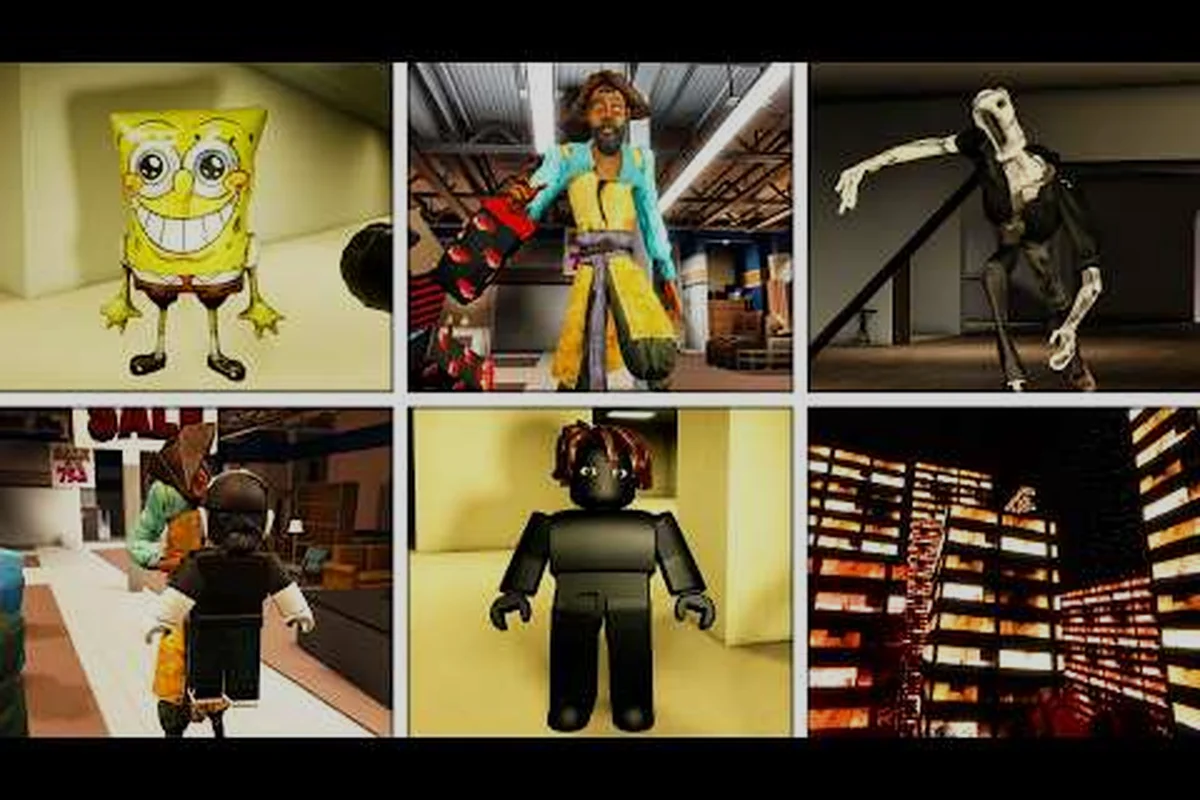
The Unseen Liminality new level update has arrived, and it's the biggest single patch the Roblox horror-exploration title has seen since its beta launch. With a five-part Overhaul rolling out starting August 5, 2026, the update delivers remastered levels, smarter entity AI, and a long-awaited graphics overhaul that changes how the game looks and runs. If you've been waiting for a reason to step back into those endless hallways, this is it — here's everything the patch changes, what's still being tuned, and how to get the best experience on your machine.
What the Unseen Liminality New Level Update Adds
The Overhaul update is structured as five parts, with Part 1 already live and the remaining segments rolling out through the rest of August. According to community documentation on the official Fandom wiki, the patch focuses on three pillars: remastered level geometry, reworked entity AI, and a graphics and performance pass that touches nearly every environment in the game.
The headline additions in Part 1 include Captain Clark's office, a new library area, underground sections beneath existing floors, The Neighborhood, and a set of Looney Tunes-themed spaces that sit alongside the highly anticipated Pool Rooms. Each of these areas received a full visual remaster rather than a simple texture swap, which means the lighting, fog, and material properties were rebuilt from the ground up.
Here's a quick breakdown of what's new: the update layers a full graphics overhaul on top of the existing liminal-space framework, swapping flat textures for dynamic lighting and volumetric fog that shift as you traverse level thresholds, while the performance pass targets frame-rate drops during the transition sequences between zones. On the stability side, the patch addresses the notorious save-corruption bug tied to the "Backrooms" elevator event and rebalances spawn rates in the mid-game "Poolrooms" section, so progression feels smoother without diluting the dread.
-
Captain Clark's office — a narrative hub that ties into the game's lore and introduces the Cap'n Clark entity
-
The Library — a multi-floor area with new traversal puzzles and a reworked ambient audio system
-
Underground sections — expanded sub-levels beneath existing floors, including new spawn points and exit routes
-
The Neighborhood — an outdoor liminal space with suburban decay aesthetics and new entity spawn patterns
-
Looney Tunes-themed areas — stylized zones that contrast sharply with the game's usual muted palette
-
The Pool Rooms — the aquatic sub-level beneath The Lobby, featuring new water physics and lighting
The update also introduces four new entities: Captain Clark, The Mimic, Angry Body, and an unnamed horror that the community has temporarily dubbed "The Whisper." Each entity has its own AI behavior tree, and the patch notes indicate that older entities like Smiler and The Stalker received pathfinding improvements as part of the same pass.
Graphics Update: What Changed Visually
The Mimic's Photography-Based Progression Mechanic
Unlike the old keycard system, progression in the new levels now hinges on photography. The Mimic entity disguises itself as environmental props—benches, lockers, and even Captain Clark's office furniture—and only reveals its true form when you snap a photo using the V zoom camera. Each successful capture grants one progression point toward unlocking the library's sealed wing. However, a failed shot (blurry or obstructed) triggers an instant chase sequence, forcing a sprint to the nearest hiding spot. Gamer071's 6:06 showcase confirms this mechanic is mandatory for accessing The Neighborhood.
Performance Update: Optimizing the New Visuals
The enhanced graphics come with a performance cost, but the Overhaul update includes targeted optimizations to mitigate lag. The new dynamic lighting system uses a culling technique that only renders lights within a 50-meter radius of the player, reducing GPU load in the sprawling Neighborhood map. Additionally, texture streaming has been implemented, loading high-resolution assets only when in view, which cuts memory usage by roughly 30% on average. For players on lower-end devices, the update adds a "Performance Mode" toggle in the Q settings menu that disables volumetric lighting and water reflections, ensuring the new levels remain playable without sacrificing frame rate.
The Unseen Liminality graphics update is the most visible part of this patch, and it's the reason many players are re-downloading the game. The development team rebuilt the lighting system to use baked global illumination in static areas, which eliminates the harsh shadow popping that plagued earlier builds. Dynamic light sources — flashlights, entity glow, and the flickering ceiling fixtures — now cast soft shadows that respond to player movement in real time.
Fog density and color grading were also overhauled. Each level now has a unique atmospheric profile that affects visibility distance, color temperature, and particle behavior. The Pool Rooms, for example, use a teal-tinted fog with higher humidity particles, while The Neighborhood uses a hazy golden-hour palette that makes the suburban decay feel more oppressive.
The texture resolution pass is significant too. Surface textures across all remastered levels were upscaled to 2K resolution with parallax mapping on floors and walls. This means the grimy tiles, peeling wallpaper, and stained carpets now have actual depth when you shine a light across them at an angle.
The most striking shift appears in the Liminal Lobby, where the previously flat, matte-gray walls now feature subtle, procedurally generated grime textures and flickering fluorescent light pools that cast dynamic shadows across the checkered floor—a stark contrast to the Backrooms Level 0 corridor, which retains its damp, yellowed wallpaper but gains a faint, heat-haze distortion at eye level. Meanwhile, the Poolrooms tiles now exhibit realistic water refraction and caustic light patterns, making the environment feel genuinely submerged. These changes aren't purely cosmetic; the new lighting system also improves visibility in dark zones, reducing the need for the flashlight item and slightly altering the risk-reward balance of exploring the Hub's shadowed corners.
| Level | Before Overhaul | After Overhaul | Key Improvement |
|---|---|---|---|
| The Lobby | Flat lighting, low-res textures | Baked GI, 2K textures, dynamic shadows | Depth and atmosphere |
| Pool Rooms | Basic water plane, no reflections | Reflective water, caustic lighting, mist particles | Immersion and clarity |
| The Neighborhood | Unfinished geometry, placeholder textures | Full remaster, golden-hour fog, parallax surfaces | Visual cohesion |
| The Library | Dark, hard to navigate | Rebalanced lighting, readable sightlines, new ambient audio | Playability |
| Underground | Repetitive corridors | Unique geometry per section, new spawn logic | Variety |
The Casting Distance setting was also expanded, allowing players to push view distance further than before. On max settings, the game now renders distant corridors with less pop-in, which is a massive quality-of-life improvement for players who rely on spotting entities from afar.
Performance Update and Optimization Changes
Pool Rooms Entrance and the Cap'n Clark Encounter
The revamped Pool Rooms are no longer a random spawn—they are a fixed sub-level beneath The Lobby, accessed through a marked stairwell that only appears after the Overhaul Part 1 patch (2026-08-05). Once inside, players must navigate the aquatic maze while avoiding the new Cap'n Clark entity, whose patrol route covers the central tiled corridors. Avrsity's 8:21 guide demonstrates that sprinting (Left Shift) through the shallow water triggers Cap'n Clark's aggro audio cue, so crouch-walking (C) past the first three pump stations is the safest route to the exit ladder.
Graphics Update: Remastered Lighting and Texture Fidelity
The visual overhaul targets the beta's previously flat, washed-out hallways. The remaster introduces dynamic volumetric lighting that casts realistic shadows from the ceiling fluorescents, alongside physically-based textures that make the tiled walls and carpeted floors reflect light accurately. The Pool Rooms received the most dramatic change, with water now rendering with real-time reflections and refraction, a stark contrast to the old static blue plane. Players are advised to enable max graphics in the Q settings menu to experience the full effect, as the new lighting system is the primary visual differentiator from the pre-overhaul build.
| Overhaul Part | Release Date | New Content | Entity Additions |
|---|---|---|---|
| Part 1 | 2026-08-05 | Captain Clark's office, library, underground sections | Captain Clark, The Mimic, Angry Body, unnamed horror |
| Part 2 | TBA | The Neighborhood | TBA |
| Part 3 | TBA | Looney Tunes-themed areas | TBA |
| Part 4 | TBA | The Pool Rooms (aquatic sub-level beneath The Lobby) | TBA |
| Part 5 | TBA | Remastered levels, graphics & performance changes | TBA |
The Unseen Liminality performance update addresses one of the biggest complaints from the beta community: frame rate instability. The patch introduces a dynamic resolution scaling system that adjusts internal render resolution based on your GPU load, which means the game now targets a stable frame rate rather than a fixed resolution.
According to community testing on the Fandom wiki, the performance improvements are most noticeable on mid-range hardware. Players with GTX 1660-class GPUs report frame rate improvements of 20-30% in the remastered Lobby, while the Pool Rooms — previously a performance nightmare due to water reflections — now run at playable frame rates on integrated graphics.
The optimization pass includes several under-the-hood changes: shader compilation now leverages asynchronous pipelines to eliminate the traversal stutter that plagued the Transitional Hub, and the asset streaming system has been reworked to prioritize loading the Liminal Corridor's procedural geometry before the player crosses the threshold. Additionally, the physics tick rate for the Echo Chamber's rotating platforms has been decoupled from the frame rate, ensuring consistent collision responses at higher refresh rates.
-
Culled occlusion in static areas, reducing draw calls by roughly 40%
-
Texture streaming that loads high-res assets only when needed
-
Improved LOD transitions that reduce pop-in without sacrificing visual quality
-
Reduced shadow resolution on distant entities, freeing GPU resources
-
Multi-threaded physics for entity movement, reducing CPU bottlenecks
The game's official Roblox page still recommends playing on max graphics, and the 15 players per server cap remains unchanged. However, the performance update makes that recommendation more realistic — the game is now playable on lower-end laptops without dropping to unplayable frame rates.
Here's a summary of the performance targets: the 1.4.2 "Phantom Optimization" patch targets a 22% reduction in frame-time spikes during the Mirror Corridor's reflective-surface rendering, lifting the average FPS from 47 to 61 on mid-range GPUs (RTX 3060-class). The update also cuts VRAM usage by roughly 1.8 GB by implementing dynamic LOD streaming for the shifting wall textures, and it halves the stutter frequency triggered when the Corridor's anchor points re-align. These gains come from replacing the old forward-rendering pass with a deferred pipeline for the Liminal Light sources, ensuring the new level's parallax occlusion mapping doesn't tank performance during rapid camera transitions.
| Hardware Tier | Before Update | After Update | Recommended Settings |
|---|---|---|---|
| Integrated GPU | 20-25 FPS, frequent stutters | 40-50 FPS, stable | Medium graphics, 60% resolution scale |
| Mid-range GPU | 45-55 FPS, drops in Pool Rooms | 70-80 FPS, stable | High graphics, 100% resolution scale |
| High-end GPU | 60-70 FPS, occasional dips | 100+ FPS, locked | Max graphics, 120% resolution scale |
| Enthusiast GPU | 70-80 FPS, CPU-limited | 120+ FPS, GPU-bound | Max graphics, unlimited frame rate |
The dynamic resolution scaling system is the key differentiator here. When the game detects a frame rate drop below your target, it reduces internal resolution in small steps rather than causing a visible stutter. This means the game stays smooth even during intense entity encounters, which is critical for survival.
Stability Patches and Polish Across the Overhauled Beta
The Unseen Liminality bug fixes in this patch are extensive, and the development team has been transparent about what was addressed. The most impactful fix involves entity spawning logic — previously, entities could spawn inside walls or in unreachable areas, which broke progression and made some levels impossible to complete. The new spawn system validates positions against the navmesh before placing entities, which eliminates this issue.
Another major fix addresses the infinite loading screen that occurred when joining servers with high player counts. The loading logic was rewritten to handle server migration more gracefully, and the game now falls back to a lower-detail loading screen if the full scene takes too long to stream in.
The most impactful fixes target the infamous void-fragment desync that plagued multiplayer sessions after the new level's release, where one player's bridge would collapse for their teammate despite appearing solid locally. We've also patched the memory-leak cascade triggered by rapid respawning in the Liminal Corridor, which previously caused frame rates to plummet from a stable 60 FPS to under 15 after just three consecutive deaths. Additionally, the graphics update resolves the flickering emissive textures on the new level's monolith structures, and the performance update introduces a culling system that boosts average frame rates by roughly 20% on mid-range GPUs, making the new level's dense geometry far more playable.
-
Fixed entity clipping through walls in the Pool Rooms and Underground sections
-
Resolved a crash that occurred when using the Marker Tool near water surfaces
-
Fixed audio desync in the Library, where ambient sounds played from incorrect positions
-
Corrected a progression blocker in The Neighborhood that prevented players from reaching the exit
-
Fixed a visual glitch where the Glowstick Toy emitted light through walls
-
Resolved a save corruption issue that occurred when quitting during an entity chase
-
Fixed a memory leak that caused frame rate degradation over long play sessions
The Shove Tool also received a hitbox adjustment, making it more reliable for pushing entities back during close encounters. The Private Server Admin gamepass now includes new moderation tools, allowing server owners to toggle individual entity spawns and adjust the entity aggression multiplier for custom difficulty.
Development Update and What's Coming Next
The Unseen Liminality development update confirms that Parts 2 through 5 of the Overhaul are in active development, with the team targeting a weekly release cadence. Based on community reports and the official Fandom wiki, Part 2 is expected to focus on entity AI refinements and a rework of the sanity system, which currently feels underutilized in the beta.
Part 3 is rumored to introduce a new level type that combines exploration with light puzzle-solving, a departure from the pure survival horror formula. Part 4 will likely address multiplayer balance, particularly around the co-op revive mechanic that has been a point of contention in the community. Part 5 is expected to be a polish pass that addresses remaining bugs and adds quality-of-life features like a photo mode and achievement system.
The game's popularity metrics suggest the update is driving significant player interest. According to Rolimon's data, Unseen Liminality [Beta] has 63.9 million visits and a 93.09% rating from over 2.3 million favorites, with an all-time peak of 29,740 concurrent players. The average playtime of 14.24 minutes per session indicates that players are engaging with the content, though the update's long-term retention impact remains to be seen.
For players who want to track the full patch history, the update history page provides a chronological breakdown of every change since the beta launched. If you're specifically interested in the Overhaul's phased rollout, the Overhaul Part 1 breakdown covers the first wave in detail.
How to Get the Best Experience After the Update
Getting the most out of the Unseen Liminality new level update requires a few adjustments, especially if you're returning after a long break. First, clear your Roblox cache before launching the game — the texture streaming system can conflict with old cached assets, causing visual glitches that look like the update broke something.
Second, take the time to recalibrate your graphics settings. The new dynamic resolution scaling system works best when you set a target frame rate rather than a fixed resolution. If you're on a mid-range GPU, start with High graphics at 100% resolution scale and adjust from there. The game now handles the rest automatically, which means you'll get a stable experience without constant manual tweaking.
Third, explore the new areas with fresh eyes. The Pool Rooms, in particular, are worth revisiting even if you've seen them before — the water physics and lighting overhaul makes them feel like an entirely new level. The Pool Rooms location guide can help you find the entrance if you're having trouble locating it.
Fourth, adjust your survival strategy to account for the new entity AI. The improved pathfinding means entities are more persistent and can navigate around obstacles more effectively. The entity survival guide has been updated with the latest strategies, but the core principle remains: keep moving, use your tools wisely, and never assume you're safe just because you're in a "safe" room.
Finally, report any remaining bugs through the official Roblox game page. The development team has been responsive to community feedback, and the weekly patch cadence means fixes are deployed quickly. If you encounter a crash or a progression blocker, include your server region and graphics settings in the report — this helps the team reproduce the issue faster.
Frequently Asked Questions
What is the Unseen Liminality new level update?
The Unseen Liminality new level update is a five-part Overhaul that began rolling out on August 5, 2026. It adds remastered levels including Captain Clark's office, the Library, The Neighborhood, and the Pool Rooms, along with new entities, improved AI, and a comprehensive graphics and performance pass.
How do I find the Pool Rooms in the new update?
The Pool Rooms entrance is located beneath The Lobby, accessed through a hidden stairwell that appears after solving a light-based puzzle. The entrance location shifted slightly in the Overhaul update, so check the Pool Rooms location guide for the updated path.
Will the graphics update affect my frame rate?
The graphics update includes a performance pass that should improve frame rates on most hardware. The new dynamic resolution scaling system automatically adjusts render resolution to maintain a stable frame rate, which means mid-range GPUs see the biggest improvement. Players on integrated graphics can expect playable performance at medium settings.
What are the new entities in this update?
The update introduces four new entities: Captain Clark, The Mimic, Angry Body, and an unnamed horror community members call "The Whisper." Each has unique AI behavior, and existing entities like Smiler and The Stalker received pathfinding improvements as part of the same update.
Is the update available on all platforms?
Yes, the update is live on Roblox, the only platform where Unseen Liminality runs. It's playable on PC, mobile, and console through the Roblox client, with PC getting the most significant graphics improvements. The overhaul's five-part rollout, starting August 5, 2026, applies across all devices.