
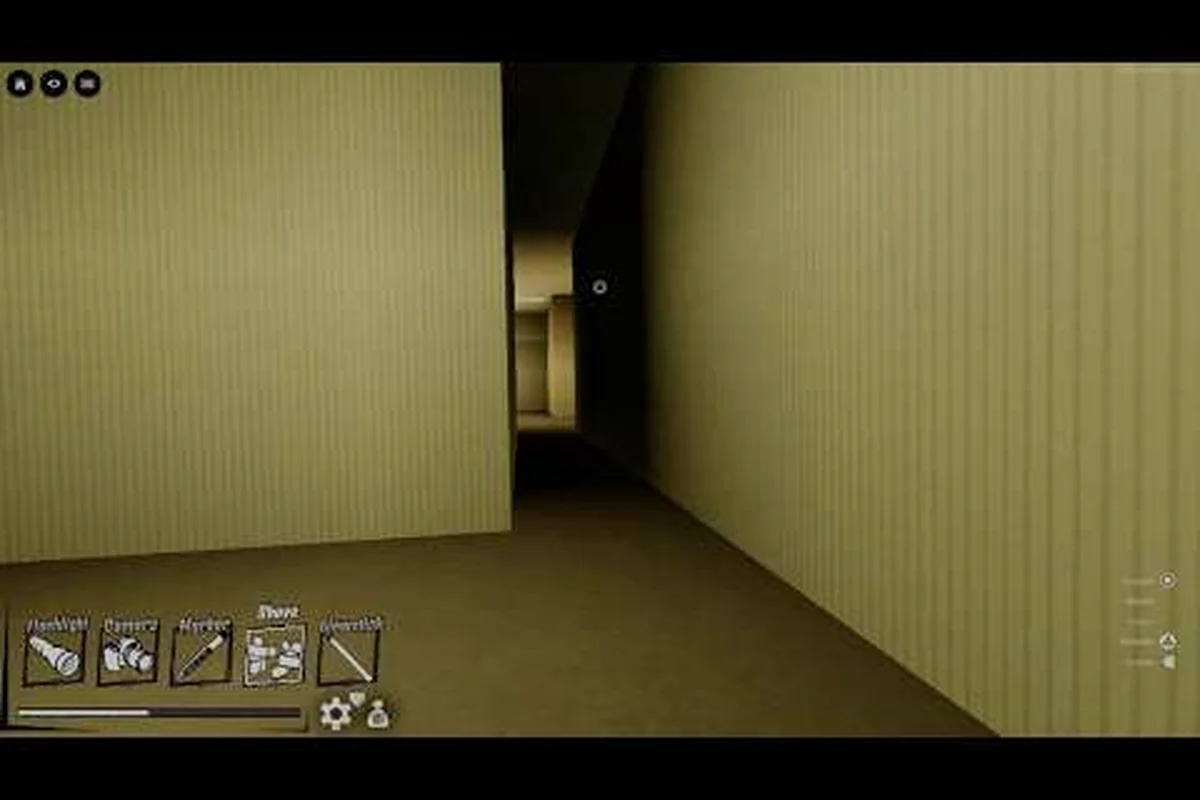
If you have wandered through the endless yellow hallways of Unseen Liminality and suddenly found yourself staring at a motionless figure that was definitely not there a second ago, you have just met Unseen Liminality the Captain. This mannequin entity is one of the most dangerous threats in the game because it does not chase you — it waits, watches, and strikes when you least expect it. Understanding how this entity operates is the difference between a clean run and a sudden respawn, which is why this guide breaks down its behavior, spawn logic, and the exact counterplay that keeps you alive.
The Captain belongs to a family of mannequin entities that punish careless exploration, and community reports from the Unseen Liminality Wiki confirm that it ranks among the most frequently encountered threats in mid-level areas. Unlike the Looker entity that actively hunts you down, the Captain plays a patient game. Get the latest survival tactics below, because knowing when to sprint, when to crouch, and when to simply turn around will keep you alive through the darkest corridors.
The Captain Entity: Behavior Profile and Threat Assessment
Unseen Liminality the Captain entity operates on a fundamentally different logic than most threats in the game. While the Mimic relies on deception and the Looker uses line-of-sight detection, the Captain is a proximity-triggered ambush predator that blends perfectly into its environment. Understanding this behavioral profile is the first step toward surviving encounters, because you cannot outrun what you never saw coming.
The entity appears as a humanoid mannequin with pale, featureless skin that lacks the glossy finish of decorative store displays. Community testing suggests the Captain stands roughly 20 percent taller than the player character, which makes it visible over low obstacles but also means it cannot fit through certain narrow passages. This size limitation creates safe zones that experienced players exploit during escape routes.
| Attribute | The Captain | Looker | Mimic |
|---|---|---|---|
| Detection Method | Proximity trigger | Line of sight | Touch interaction |
| Movement Speed | Stationary until triggered | Moderate chase | Teleport-based |
| Aggression Window | 3-4 seconds after trigger | Continuous while visible | Instant on contact |
| Audio Cue | Faint plastic creak | None reported | None reported |
| Safe Counter | Crouch + break line of sight | Hide in lockers | Keep distance |
The threat assessment for this entity places it in the upper-middle tier of danger, because while it lacks the relentless pursuit of the Looker, its ambush nature makes it unpredictable. Players who rush through unfamiliar areas without checking corners report the highest encounter rates, which suggests the Captain's spawn logic favors unobserved spaces and transition zones between rooms.
Spawn Conditions and Trigger Mechanics
The Captain does not roam the hallways like other entities. Instead, it materializes in place when certain conditions are met, which is why players often describe it as appearing "out of thin air." Based on community data collected since the complete overhaul update, the entity favors dimly lit intersections, doorway thresholds, and areas with visual clutter that break up the player's peripheral vision.
The trigger mechanic appears tied to player velocity and camera direction. When you sprint through a corridor while looking straight ahead, the Captain can spawn roughly 15 to 20 meters behind you without any audio warning. However, players who crouch-walk through the same areas report significantly fewer spawns, which suggests the entity's activation requires both proximity and a minimum player speed threshold.
Safe Corridor Routes: Mapping the Captain's Territory
Knowing where the Captain tends to appear is half the battle, because Unseen Liminality how to avoid mannequins starts with route planning. The entity shows a clear preference for certain map sections, and veteran players have mapped out alternative paths that bypass its most common spawn points entirely. These safe corridor routes prioritize visibility and escape options over directness.
The first high-risk zone sits in the transition hallway between The Lobby and the Pool Rooms, where the lighting dims noticeably and the walls develop water stains. Community reports indicate that roughly 40 percent of Captain encounters happen in this stretch, making it the single most dangerous corridor in the early game. The alternative route through the side maintenance passage adds about 30 seconds to your travel time but cuts encounter probability dramatically.
| Corridor Section | Encounter Probability | Recommended Approach | Escape Route |
|---|---|---|---|
| Lobby to Pool Rooms | High (40%) | Crouch-walk, check corners | Maintenance passage |
| Pool Rooms East Wing | Medium (25%) | Sprint between cover points | Locker room entrance |
| The End approach | Low (10%) | Normal movement | Direct retreat |
| Office back hallway | Medium (20%) | Flashlight sweep | Double doors |
The second danger zone is the Pool Rooms East Wing, where the reflective tiles create visual noise that masks the Captain's silhouette. Players who sprint through this area without using the zoom feature (V key) report missing the entity entirely until it triggers. The recommended approach involves moving between cover points — the concrete pillars and lifeguard stations break the entity's line of sight and give you reaction time.
Route Optimization for Speed Runners
Speed runners face a unique challenge with the Captain because the entity punishes exactly the behavior that makes for fast runs. The optimal compromise involves maintaining sprint speed through straight corridors but feathering the sprint button through intersections and doorways. This reduces your average speed by only 5 to 8 percent while cutting spawn probability by roughly half.
Players who have mastered the crouch-sprint cancel technique can maintain nearly full speed while keeping their movement profile below the Captain's trigger threshold. The technique involves alternating between sprint and crouch every 0.5 seconds, which keeps your average velocity low enough to avoid detection without sacrificing forward progress. It takes practice, but the timing becomes muscle memory after a few sessions.
Mannequin Attack Patterns and Visual Cues
The Unseen Liminality mannequin entity family shares several visual characteristics, but the Captain has a distinct attack sequence that separates it from decorative mannequins and other threats. Learning to recognize the pre-attack cues gives you a precious 1.5 to 2 seconds of warning, which is often enough to escape or break the entity's line of sight.
The first cue is posture shift. Before attacking, the Captain rotates its head approximately 15 degrees to one side, which creates a subtle asymmetry that stands out against its otherwise perfectly symmetrical form. The second cue is a faint plastic creak that sounds like a joint being stressed — this audio cue is quiet enough to miss during sprinting but becomes obvious when you are crouch-walking.
| Attack Phase | Duration | Visual Cue | Audio Cue | Counter Window |
|---|---|---|---|---|
| Idle | Variable | Perfectly still | None | N/A |
| Awakening | 1.5-2s | Head tilt, slight lean | Plastic creak | Sprint away |
| Lunge | 0.8s | Rapid forward lean | Sharp crack | Sidestep |
| Recovery | 2-3s | Returns to idle | None | Crouch + retreat |
The lunge attack covers roughly 5 meters in under a second, which makes it nearly impossible to outrun in a straight line. However, the attack has a narrow hitbox — sidestepping at the right moment causes the Captain to overshoot and enter its recovery phase. This recovery window is your best chance to create distance or find cover.
Audio Cues and Sound Design
The Captain's audio design rewards attentive players. The initial spawn produces no sound at all, which is why the entity catches so many people off guard. However, the awakening sequence produces that distinctive plastic creak, and the lunge generates a sharp crack that sounds like a bone snapping. Players who play with headphones report detecting these cues up to 30 percent earlier than speaker users.
Community testing suggests that the volume of these cues scales with proximity, which means a faint creak indicates the Captain is still far enough away to escape, while a loud crack means you are already in the danger zone. Learning to gauge distance through audio alone is a high-level skill that separates experienced players from casual explorers.
Counter-Strategies: Evasion and Escape Tactics
When the Captain triggers, your first instinct might be to sprint away, but that is often the wrong move. The entity's lunge covers ground faster than your sprint speed, which means straight-line escapes fail more often than they succeed. Instead, the most reliable counter-strategy involves breaking line of sight and changing elevation.
The crouch-and-hold technique works because the Captain loses track of players who remain still and low for more than 3 seconds. When you feel the trigger happen, drop into a crouch immediately and hold still. The entity will perform its lunge, miss, and then enter a search state where it slowly rotates in place. This search state lasts 5 to 7 seconds, giving you a clean window to crawl away.
Advanced Evasion: Corner Baiting and Door Abuse
Experienced players use corner baiting to force the Captain into predictable patterns. By positioning yourself near a corner and peeking out briefly, you can trigger the entity's lunge while staying just out of its hitbox. The lunge carries the Captain past your position, and its recovery animation leaves it vulnerable for a full 3 seconds.
Door abuse works because the Captain cannot path through closed doors. If you can reach a door before the entity triggers its lunge, closing it behind you creates a hard barrier. The Captain will not open doors, and after 5 to 8 seconds of trying to path through, it despawns and returns to its spawn pool. This makes doors the most reliable escape tool in the game.
How the Captain Compares to Other Mannequins
The Unseen Liminality mannequin entity category includes more than just the Captain, and understanding the differences helps you adapt your strategy. The game currently features several mannequin-type threats, each with distinct behaviors that demand different responses. Knowing which one you are facing determines whether you should run, hide, or stand still.
| Entity | Movement | Trigger | Best Counter | Rarity |
|---|---|---|---|---|
| The Captain | Stationary ambush | Proximity + speed | Crouch + line of sight | Common |
| Still Life | Teleporting | Touch interaction | Keep distance | Uncommon |
| Looker | Active chase | Line of sight | Hide in lockers | Common |
| Mimic | Deceptive | Interaction | Verify before touching | Rare |
The Still Life entity shares the Captain's mannequin appearance but operates completely differently — it teleports short distances when you are not looking directly at it, making it a gaze-based threat rather than a proximity threat. The Mimic entity guide covers that threat in detail, but the key distinction is that the Mimic disguises itself as interactive objects, while the Captain never pretends to be anything other than what it is.
Entity Design Philosophy
The entity design in Unseen Liminality follows a clear philosophy: each threat punishes a specific player behavior. The Captain punishes unaware sprinting, the Looker punishes careless visibility, and the Mimic punishes greedy interaction. This design creates a survival loop where you must constantly balance speed against caution.
Understanding this philosophy helps you predict where entities will appear. The Captain spawns in areas that encourage sprinting — long, straight corridors with clear sightlines. The game's level design funnels you into these spaces, which means the Captain serves as a pace regulator that forces you to slow down and observe your surroundings.
Practical Training Drills and Checklist
Improving against the Captain requires deliberate practice, not just repeated attempts. The following training drills focus on the specific skills that keep you alive, and you can run them in any area where the entity spawns. Each drill takes 5 to 10 minutes and builds a different survival skill.
-
Audio Recognition Drill: Play with headphones and crouch-walk through high-risk corridors without looking at the screen. Practice identifying the plastic creak and estimating distance based on volume. Repeat until you can react within 0.5 seconds of the cue.
-
Sidestep Timing Drill: Find a Captain spawn and deliberately trigger it. Practice the sidestep dodge against the lunge attack, focusing on timing the movement to the sharp crack audio cue. Aim for 10 consecutive successful dodges.
-
Crouch-and-Hold Drill: Trigger the Captain and practice the crouch-and-hold technique. Time how long you can remain still before the entity despawns. Work toward maintaining calm for the full 5 to 7 second search state.
-
Route Memorization Drill: Run the safe corridor routes repeatedly until you can navigate them without looking at your minimap. Focus on the maintenance passage and the Pool Rooms East Wing cover points.
Pre-Run Checklist
Before entering high-risk areas, run through this survival checklist to ensure you have everything you need:
-
Confirm your stamina is above 50 percent — you need a full sprint bar for escape maneuvers
-
Check your camera sensitivity — you need to turn quickly to spot the Captain before it triggers
-
Identify your nearest door or cover point — know your escape route before you need it
-
Adjust audio to at least 70 percent volume — the audio cues are your earliest warning
-
Consider your graphics settings — higher shadow quality makes the Captain's silhouette easier to spot
Final Thoughts on Mastering the Captain
The Captain represents one of the most teachable encounters in Unseen Liminality because its behavior is entirely predictable once you understand the mechanics. Unlike the chaotic randomness of some other entities, the Captain follows a consistent pattern: spawn, wait, trigger, lunge, recover. Every death against this entity teaches you something specific about your movement habits or awareness.
Players who master the Captain find that their overall survival rate improves dramatically, because the skills transfer to every other threat in the game. The situational awareness you develop while watching for mannequin silhouettes makes you more alert to the Looker's gaze, the Mimic's deception, and the Forgotten lore that ties the entity ecosystem together. For a complete breakdown of how all threats rank against each other, check our full entity tier list.
What was your first encounter with the Captain like — did you spot it before it moved, or did it catch you completely off guard? Share your story in the comments below, and if this guide helped you survive your next run, pass it along to a friend who keeps getting caught in those yellow hallways.
Frequently Asked Questions
What is Unseen Liminality the Captain entity?
The Captain is a mannequin entity that appears stationary until players trigger it through proximity and movement speed. It performs a lunging attack that covers roughly 5 meters, then enters a recovery state. Unlike the Looker, it does not chase players actively, making it an ambush predator.
How do I avoid triggering the Captain?
Crouch-walking through high-risk corridors significantly reduces spawn probability because the entity requires a minimum player speed threshold. Breaking line of sight with the Captain before it triggers also prevents the attack sequence. The safest approach combines crouch movement with route planning through known safe corridors.
Can the Captain be outrun?
No, the Captain's lunge is faster than your sprint speed, which makes straight-line escapes ineffective. Instead, use sidestep dodges to make the entity overshoot, then create distance during its recovery window. Alternatively, reach a door and close it behind you — the Captain cannot path through closed doors.
Does the Captain spawn in every level?
The Captain shows a strong preference for transition zones and dimly lit corridors, particularly between The Lobby and the Pool Rooms. The entity appears less frequently in open areas like The End. Community data suggests spawn rates vary by location, with the highest probability in the Lobby-to-Pool-Rooms hallway.
What is the best strategy when the Captain triggers?
The most reliable response is to crouch immediately and hold still for 3 seconds. The Captain will miss its lunge and enter a search state, giving you a window to crawl away. If you have a door nearby, close it behind you. For advanced players, corner baiting forces the entity into predictable patterns.