
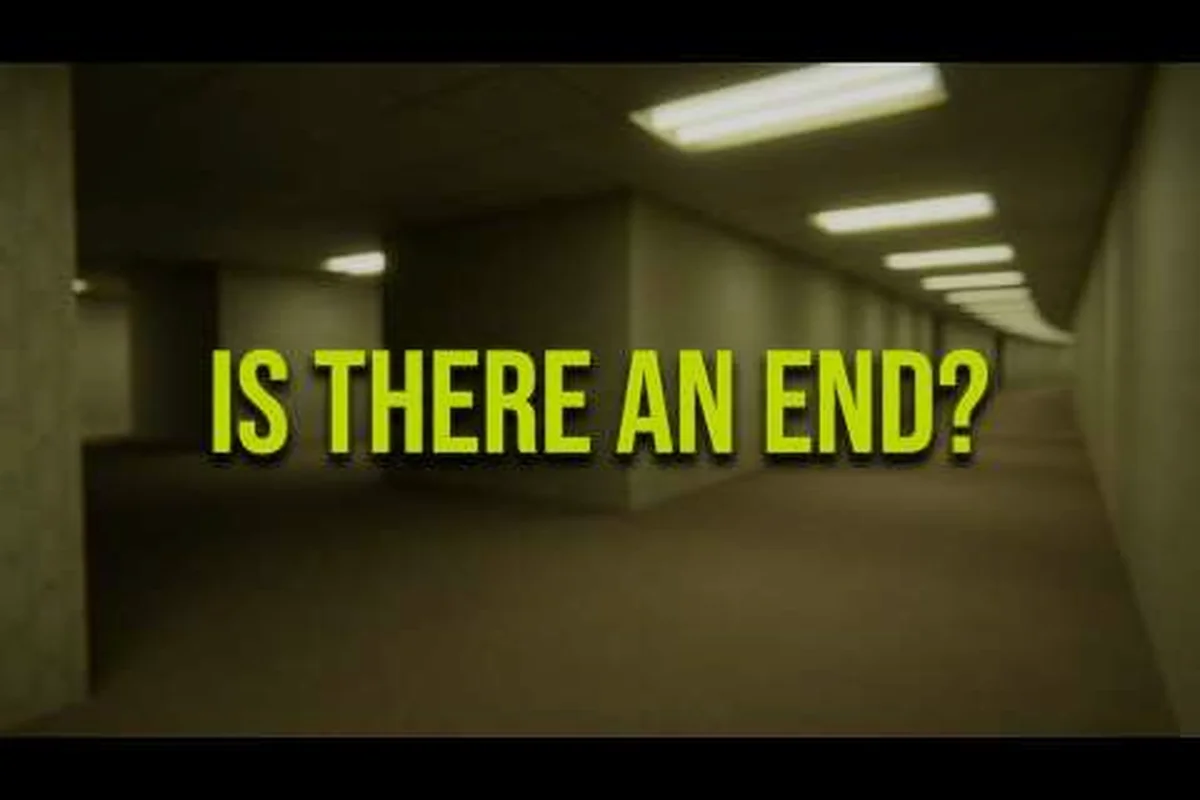
Unseen Liminality The Forgotten isn't just a phrase the developers tossed onto the title screen — it's a narrative key that unlocks the game's deepest mystery. Every hallway, every flickering light, and every entity you encounter traces back to a single question: what does it mean to be forgotten in a space that refuses to let go? Understanding this hidden lore transforms the game from a simple exploration experience into a haunting story about memory, loss, and the Captain's dark origin. The answer changes how you read every level and every entity encounter, which is why the community has spent months piecing together the fragments scattered across the 17 Areas of Interest.
The Forgotten Title: What the Name Reveals About the Game's Core Mystery
The phrase unseen liminality the forgotten appears throughout the game's marketing materials and loading screens, but most players never stop to parse its meaning. The title operates on three distinct layers that the developers have confirmed through environmental storytelling rather than explicit dialogue. First, the forgotten refers to the entities themselves — beings that were once something else before being abandoned in these endless hallways. Second, it points to the player character, who arrives with no memory of how they entered this space. Third, and most importantly, it hints at the Captain, the game's central figure whose backstory remains the most debated topic in the community.
According to community reports from the Unseen Liminality Wiki, the game's official description emphasizes exploring "what is remembered in the endless hallways" — a deliberate inversion of the title's promise. You're not exploring what's there; you're exploring what's been erased. This semantic tension drives the entire narrative experience. The game challenges you to reconstruct a story from absence, to find meaning in the spaces where something used to be. Players who rush through levels without examining the environmental details miss the connective tissue that binds the whole experience together.
The title also carries a meta-commentary about the game itself. Unseen liminality what does it mean becomes a question that applies both to the fictional world and to the player's real-world experience of navigating a Roblox game that feels far more atmospheric than the platform typically allows. The developers have crafted a space where the liminal — the transitional, the in-between — becomes the permanent state. Nothing here is meant to be seen clearly, and nothing is meant to be fully understood. That ambiguity is the point.
| Title Element | Literal Meaning | Narrative Significance |
|---|---|---|
| Unseen | Not visible, hidden from view | Entities and secrets operate beyond normal perception |
| Liminality | The state of being in-between | Every level exists as a threshold, never a destination |
| The Forgotten | Something abandoned, erased from memory | Entities, levels, and the Captain all share this fate |
The Captain's Dark Origin: Piecing Together the Entity's Backstory
The Captain stands apart from every other entity in the game because he's the only one with a name, a title, and a visible history. The unseen liminality the captain lore has become one of the most searched topics in the community, with players debating everything from his human identity to the circumstances of his transformation. What we know comes from scattered notes, environmental clues, and the way he behaves differently from every other threat in the game.
The Transformation Theory
The dominant theory among players suggests the Captain was once a real person — possibly the original navigator of these hallways — who became trapped and eventually merged with the space itself. Unlike the Mimic or the Looker, which appear to be pure manifestations of the liminal environment, the Captain retains traces of human behavior. He walks with purpose. He pauses at certain intersections as if remembering something. He doesn't chase you the way other entities do; he stalks you with a patience that feels almost deliberate.
Community testing has revealed that the Captain's behavior changes based on your actions in specific rooms. If you examine certain photographs scattered through the levels, he becomes more aggressive. If you ignore them, he maintains a slower pursuit pattern. This suggests a connection between memory and aggression — the more you engage with the forgotten history, the more the Captain reacts. It's a brilliant piece of unseen liminality entity lore that rewards observant players while punishing those who rush through.
The Connection to the Hidden Hallway
The Captain's origin story connects directly to the game's most secret area. Players who have explored the hidden hallway report finding a room that appears to be the Captain's quarters from before his transformation. Inside, you'll find a uniform, a logbook, and a photograph of a person whose face has been scratched out. The logbook entries, reconstructed by community members, describe a voyage that went wrong — a journey into a space that shouldn't exist, a crew that slowly disappeared one by one.
The logbook's final entry reads as a confession: "I should have turned back. I should have let them go. Instead, I stayed, and now I am the space itself." This single line has fueled countless theories about whether the Captain is a victim or a villain. Did he sacrifice himself to contain the liminal spread, or did his refusal to leave doom everyone else? The game never answers directly, which is precisely why the lore community keeps returning to this question.
| Captain Lore Element | Evidence in Game | Community Interpretation |
|---|---|---|
| Human Identity | Uniform, logbook, personal quarters | Former navigator or expedition leader |
| Transformation | Merged with the environment | Became the space itself, not just an inhabitant |
| Motivation | Behavior shifts with player actions | Still trying to protect or trap something |
| Connection to Player | Recognition patterns in pursuit | May know who you are or why you're here |
Entity Origins: How Every Threat Connects to the Forgotten Theme
The unseen liminality entity origins follow a consistent pattern that reinforces the game's central theme. Every entity you encounter represents something that was once ordinary — a person, an object, a moment — that became trapped in the liminal space and transformed into something unrecognizable. Understanding this pattern changes how you approach each encounter because it reframes these threats as victims rather than pure antagonists.
The Mimic and the Loss of Identity
The Mimic, one of the game's most dangerous entities, exemplifies this theme perfectly. According to player reports and the official Roblox game page, the Mimic appears as a distorted version of the player character, suggesting it was once a person who lost their identity so completely that they now steal the forms of others. The unseen liminality entity lore surrounding the Mimic describes it as a being that forgot itself so thoroughly that it can only exist by becoming someone else.
The Still Life and Frozen Moments
The Still Life entity takes a different approach to the forgotten theme. Rather than stealing identities, it represents moments that were frozen in time and abandoned. Players report finding Still Life entities posed in everyday activities — reading a book, drinking coffee, staring out a window — as if the world simply stopped while they were mid-action. These entities don't chase you; they simply exist, reminders of lives that were interrupted and never resumed.
The unseen liminality hidden lore suggests these entities were once real people who became so absorbed in their routines that they didn't notice the liminal space consuming them. By the time they realized what was happening, it was too late. The game's refusal to make these entities hostile adds to their tragedy — they're not threats, they're warnings.
| Entity | Origin Theory | Behavior Pattern | Connection to Forgotten Theme |
|---|---|---|---|
| The Captain | Former navigator who merged with space | Deliberate stalking, memory-based reactions | The most complete story of transformation |
| The Mimic | Person who lost their identity | Steals player appearance, mimics movements | Represents complete loss of self |
| Still Life | People frozen in daily routines | Static, non-hostile, environmental | Represents interrupted lives |
| The Looker | Former observer or sentinel | Watches from distance, approaches when seen | Represents the act of witnessing |
Level Lore: How Each Area Tells Part of the Forgotten Story
The unseen liminality level lore follows a progression that mirrors the stages of forgetting. Each level represents a different phase of loss, from the initial disorientation of The Lobby to the complete dissolution of The End. Understanding this progression helps players appreciate why the levels are structured the way they are and why certain entities appear in specific locations.
The Lobby: The Threshold of Memory
The Lobby serves as the game's introduction to the forgotten theme. This space feels almost familiar — it resembles hotel lobbies, office waiting areas, and other transitional spaces from the real world. The familiarity is deliberate. The Lobby represents the moment before forgetting begins, when the space still resembles something recognizable. The entities here are fewer and less aggressive because the process of transformation hasn't fully taken hold.
The Hallways: The Descent into Confusion
As you progress through the hallways, the environment becomes increasingly distorted. Doors appear where walls should be. Corridors loop back on themselves. The space itself seems to forget its own layout. This is where the unseen liminality what does it mean question becomes most pressing — the game is literally showing you what it feels like to lose your bearings, to have your memory of a place dissolve into something unrecognizable.
The Pool Rooms and Beyond: Complete Dissolution
The Pool Rooms represent the point of no return in the game's narrative structure. Here, the environment has fully transformed into something that never existed in the real world. The tiles are too clean, the water too still, the lighting too artificial. This is the space of pure liminality, where nothing is remembered and nothing is real. The entities here are at their most aggressive because they've fully completed their transformation into the forgotten.
According to the complete gameplay video by Plus Roblox, the level design intentionally mirrors this narrative progression, with each area becoming progressively more detached from reality. The video demonstrates how the visual language shifts from recognizable to abstract, reinforcing the theme without a single line of dialogue.
| Level | Stage of Forgetting | Visual Characteristics | Entity Presence |
|---|---|---|---|
| The Lobby | Threshold | Familiar, hotel-like, warm lighting | Minimal, passive |
| The Hallways | Confusion | Distorted, looping, inconsistent | Moderate, opportunistic |
| Pool Rooms | Dissolution | Artificial, sterile, unreal | Heavy, aggressive |
| The End | Complete Loss | Abstract, formless, void-like | Maximum, relentless |
How to Experience the Lore: Practical Tips for Uncovering Hidden Story Details
Experiencing the full unseen liminality hidden lore requires a different approach than standard gameplay. Most players rush through levels trying to survive, but the story rewards those who slow down and examine everything. Here's how to get the most from your exploration:
Slow Down and Examine Everything
The game hides story details in plain sight. Photographs, notes, and environmental anomalies all contribute to the narrative, but only if you take the time to look. Players who rush through levels miss the majority of the lore because the game doesn't highlight important objects — you have to find them yourself. Make it a habit to check every room, every corner, and every surface for anything that seems out of place.
Track Your Discoveries
Because the lore is scattered across multiple levels and playthroughs, keeping track of what you've found is essential. The community has developed comprehensive checklists for the 17 Areas of Interest, and using these as a reference helps ensure you don't miss anything. The secret rooms guide provides detailed information about hidden areas that contain crucial story elements.
Play With Headphones
The game uses audio cues extensively to tell its story. Faint whispers, distant footsteps, and environmental sounds all contribute to the narrative atmosphere. Playing with headphones reveals layers of audio that are nearly inaudible through speakers. Several players have reported hearing what sounds like the Captain's voice in specific locations, though the words remain unintelligible.
Compare Notes With the Community
The lore community has made significant progress through collaboration. What one player discovers in a single playthrough becomes part of a larger picture when shared. The Captain entity guide compiles community findings about his behavior and origins, and the update history shows how the developers have expanded the lore over time.
| Exploration Strategy | Time Investment | Lore Reward |
|---|---|---|
| Rush through levels | Minimal | Very little story content |
| Examine visible objects | Moderate | Basic narrative fragments |
| Search hidden areas | High | Major story revelations |
| Full completionist run | Maximum | Complete narrative picture |
The Final Area and the Forgotten Ending
The game's final area, The End, brings the forgotten theme to its logical conclusion. Here, the environment dissolves into something almost formless, and the Captain appears in his most complete form. The unseen liminality the forgotten narrative reaches its climax as you finally understand what happened to this space and its inhabitants.
The final encounter isn't a traditional boss fight. Instead, the game presents you with a choice that determines which ending you receive. According to the final area walkthrough, your actions throughout the game influence which options are available. Players who engaged with the lore extensively report different dialogue and different outcomes than those who simply rushed to the end.
The endings themselves reinforce the game's central theme. One ending suggests you become part of the forgotten, joining the entities in their eternal liminal existence. Another ending shows you escaping, but with the implication that you'll eventually forget what you experienced. A third, hidden ending requires specific actions across multiple playthroughs and reveals a glimmer of hope — the possibility that the forgotten can be remembered again.
The game's refusal to provide a definitively happy ending is consistent with its thematic core. Unseen liminality what does it mean ultimately asks players to sit with ambiguity, to accept that some questions don't have clean answers. The forgotten remain forgotten, and that's the point.
Frequently Asked Questions
What does "The Forgotten" mean in Unseen Liminality?
The Forgotten refers to the entities, levels, and stories that have been erased from memory within the game's world. Each entity represents something that was once ordinary before being transformed by the liminal space. The title suggests that the game's entire environment exists as a repository for things that have been abandoned and lost.
Who is the Captain in Unseen Liminality?
The Captain is the game's central entity, believed to be a former navigator who became trapped in the liminal space and eventually merged with it. Unlike other entities, he retains traces of human behavior and appears to have a personal connection to the player. His full backstory is revealed through environmental storytelling and hidden documents.
How do I find the hidden lore in Unseen Liminality?
Hidden lore requires thorough exploration of all 17 Areas of Interest, careful examination of environmental details, and multiple playthroughs. Look for photographs, logbooks, and anomalies that seem out of place. Playing with headphones reveals audio cues that contribute to the story. Community resources and guides can help you locate specific lore items.
Is the Captain a villain in Unseen Liminality?
The game deliberately avoids a clear answer. The Captain's logbook suggests he made a choice to stay in the liminal space, possibly to contain its spread, but the consequences of that choice were devastating. Whether he's a tragic hero or a selfish figure depends on how you interpret the evidence, and the game supports both readings.
Does Unseen Liminality have multiple endings?
Yes, the game features at least three endings that depend on your actions throughout the playthrough. Engaging with the lore extensively unlocks different narrative options in the final area. A hidden ending requires specific actions across multiple playthroughs and offers the game's only hint of hope for the forgotten.