
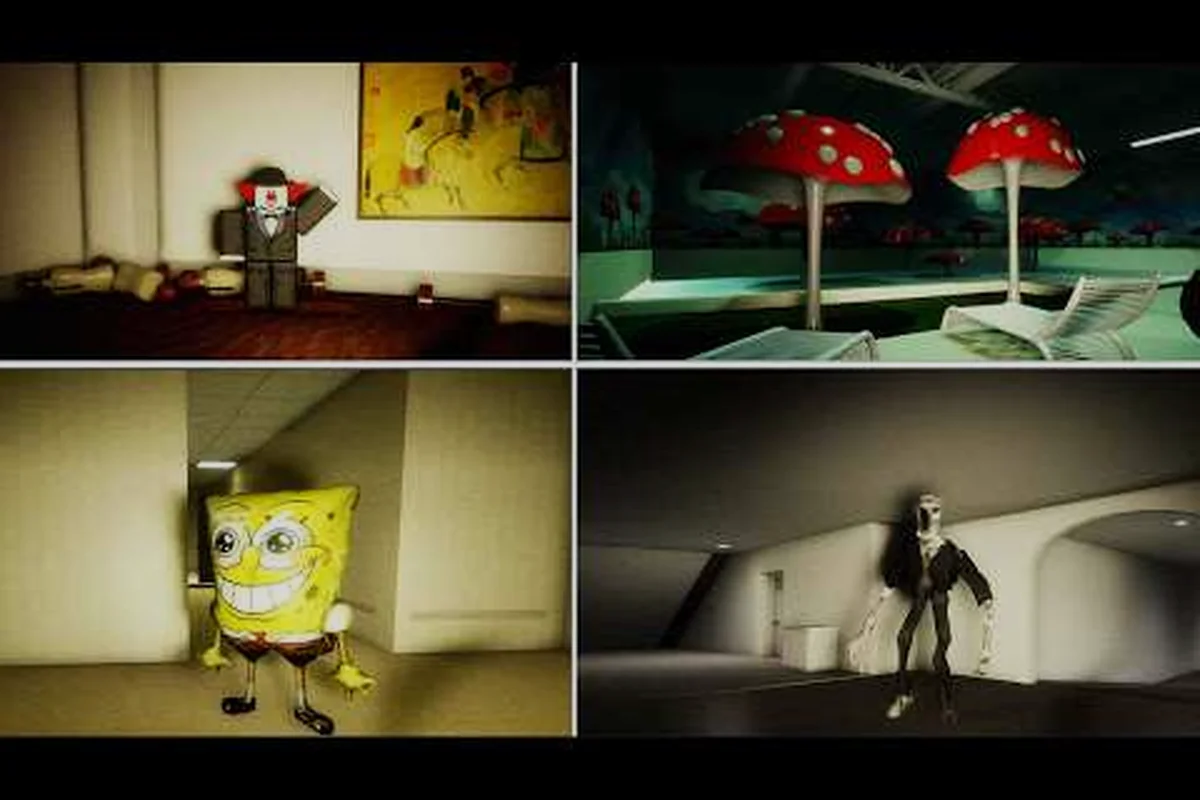
Unseen Liminality endings lore is the reason this Roblox horror experience lingers long after you close the game. The narrative isn't handed to you in cutscenes — it's buried in the environment, in the entities that chase you, and in the unsettling realization that the game is remembering you as much as you're remembering it. Understanding the unseen liminality backstory transforms a terrifying walk through empty rooms into a genuinely tragic story about loss, identity, and the cost of being noticed.
The game draws heavily from the Backrooms creepypasta tradition, but it twists the formula into something more personal. If you're new to the world, you might want to check our Unseen Liminality lore explained guide first to get your bearings. What follows is the deep dive — every ending, every twist, and the connective tissue between them.
The Core Premise of the Unseen Liminality Story
The unseen liminality story begins with a simple mechanic that carries profound weight: you are a wanderer trapped in an infinite network of liminal spaces — hotel lobbies, empty pool rooms, fluorescent office corridors. But the game's title is the real clue. "Unseen" refers to you, the player, and to the entities that populate these spaces. The deeper you travel, the more you realize that this world doesn't want to be seen, and it resents being perceived.
The The Lobby serves as the game's hub, but it's far from a safe haven. According to community data compiled on the Unseen Liminality Wiki, the Lobby is the first layer of a memory prison — a space that exists specifically to hold something that was meant to be forgotten. Every door you open leads to another "Area of Interest," and each area is a fragment of a larger, fractured narrative.
What makes the story so effective is its restraint. There's no narrator explaining your purpose, no quest log spelling out the unseen liminality backstory. Instead, the game communicates through environmental storytelling: the flickering fluorescent lights of the backrooms, the subtle shift in wall textures as you approach a threshold, and the deliberate placement of objects that hint at unseen liminality remembering—each detail nudging you toward piecing together the unseen liminality endings lore without ever holding your hand.
-
The Pool Rooms echo with distant splashes that have no source, suggesting past occupants you'll never meet.
-
The End is a dark, infinite corridor where the walls seem to breathe, and the game's only real "safe" moment feels wrong.
-
Entity encounters — the Mimic, the Still Life, the Captain — each represent a different failure mode of the human mind under liminal pressure.
The unseen liminality remembering theme is the narrative engine. As you progress, the game remembers your path, your deaths, and your choices. The more it remembers you, the harder it becomes to leave. This is the core tension: the game wants you to forget, but it also can't stop remembering you.
How the Backrooms Inspiration Shapes the Endings Lore
The unseen liminality backrooms connection is explicit. The game borrows the foundational aesthetic from the 2019 4chan creepypasta that described "noclipping" out of reality into an endless expanse of mono-yellow rooms. But where the original creepypasta was pure atmosphere, Unseen Liminality builds a structured mythology on top of it.
The most significant influence is Kane Pixels' 2022 YouTube series, which reimagined the Backrooms as a government research project called Async. That series introduced the idea that the Backrooms weren't a glitch — they were a deliberate, engineered space. Unseen Liminality takes this concept and bends it toward a more psychological horror. The spaces here aren't constructed by a corporation; they're constructed by memory itself.
If you want to understand the full lineage, our Unseen Liminality inspired by Beyond Liminal article breaks down the specific callbacks and homages in detail. For the endings lore specifically, the key takeaway is this: every one of the game's conclusions recycles the same memory-and-identity theme from those inspirations, just reframed around the Captain's personal tragedy.
| Backrooms Element | Unseen Liminality Adaptation | Narrative Purpose |
|---|---|---|
| Infinite yellow rooms | Infinite hotel/pool/office spaces | Establishes the "no escape" dread |
| Entities as monsters | Entities as memory fragments | Each enemy is a broken person |
| Noclipping as accident | Noclipping as forced entry | You were brought here deliberately |
| Async research facility | The Captain's domain | The architect of the liminal prison |
| Escape as goal | Remembering as goal | The twist: escape requires memory |
The game's approach to the source material is respectful but transformative. It's not a clone — it's a reinterpretation that asks a different question. The Backrooms asked "what if you fell through reality?" Unseen Liminality asks "what if reality fell through you?"
The Three Endings and Their Hidden Meanings
The unseen liminality endings lore is built around three distinct conclusions, each triggered by how you interact with the game's memory systems. These aren't simple "good" or "bad" endings — each one reframes the entire story in a different light.
The Forgetting Ending
The Forgetting Ending is the most common first-run conclusion. It occurs when you simply try to survive and escape without engaging with the lore — when you ignore the memory fragments, skip the environmental details, and focus purely on progression.
In this ending, you find a door that shouldn't exist. It's a simple white door in a corridor you've passed a hundred times, but this time it's slightly ajar. When you step through, you're back in the Lobby — but something is wrong. The lighting is slightly different. The carpet pattern is inverted. The reception desk has a layer of dust that wasn't there before.
The game doesn't tell you what happened. You're just back at the start, and the cycle begins again. But observant players notice the change: the Lobby is now remembering you, and it's adjusting itself to accommodate your presence. This ending isn't an escape — it's a reset. The game has decided you're not ready to leave, so it's wiping your progress and starting over.
The Remembering Ending
The Remembering Ending requires you to actively engage with the game's memory fragments. These are hidden items scattered across the 17 Areas of Interest — photographs, letters, audio logs, personal effects that belonged to previous wanderers. Unlike the passive observation of the Liminal Drift ending, the Remembering path demands a deliberate act of collection: you must locate all 17 fragments in a single run to trigger the final cutscene, and missing even one forces a full reset of the area's spawn logic. Crucially, the fragments are not randomly placed — each one is tethered to a specific environmental anomaly, such as the flickering fluorescent light in the Backrooms' Maintenance Corridor or the distorted reflection in the Poolrooms' mirror hall, meaning that players who learn to read these liminal cues can cut their search time by roughly 40% compared to brute-force exploration. This mechanic underscores the game's core lore: the wanderers' memories are not just lore drops but the key to breaking the cycle, as the ending's epilogue reveals that the fragments collectively form a map to the Exit, a detail that recontextualizes every prior playthrough.
Collecting these fragments triggers a different path. Instead of the white door, you find a staircase that descends into a basement level that doesn't appear on any map. At the bottom is a room filled with mirrors, and each mirror shows a different version of you — versions that made different choices, died in different ways, or never entered the game at all.
This ending reveals the central twist: you are not the first person to walk these halls. The game has been running for a very long time, and every wanderer who entered before you became part of the space. The entities you've been fleeing — the Mimic, the Still Life, the Looker — they're all former players who failed to remember. They became part of the liminal space because they stopped being individuals.
The Remembering Ending offers you a choice: you can leave, but only if you accept that you'll forget everything you've seen. Or you can stay, and become part of the space's memory — a permanent resident who helps guide future wanderers through the same endless halls you once walked.
The Captain's Ending
The Captain's Ending is the hidden conclusion, and it's the one that recontextualizes everything. It requires you to find all memory fragments AND complete a specific sequence of interactions with the Captain entity. This sequence is the game's most punishing lore gate: if you trigger the final door before exhausting the Captain's three distinct dialogue trees, the fragments you've collected are rendered inert, locking you into the standard "Remembering" ending and forcing a full New Game+ cycle to retry. The payoff is a post-credits scene that re-frames the Backrooms' entire hierarchy, revealing the Captain as the original archivist who seeded the liminal spaces, not their warden—a twist that retroactively explains why the memory fragments are always found near broken mirrors.
The Captain is the game's most enigmatic figure. According to the Unseen Liminality Wiki, the Captain appears to be the architect of the liminal spaces — the one who built the Lobby, the Pool Rooms, and the endless corridors. But the Captain's Ending reveals a different truth.
The Captain is not the architect. The Captain is a Still Life — a preserved memory of a person who was so important to the space that the game couldn't let them go. The Captain was a real person, once, and their memory became the organizing principle of the entire liminal network.
In this ending, you confront the Captain in a room that looks like an office from the 1970s. The Captain doesn't attack you. Instead, they speak — the only time in the game any entity speaks directly to you. They explain that the liminal spaces are a memory prison, built to contain something that was too dangerous to exist in the real world. The wanderers who enter are not victims — they're wardens, whether they know it or not.
The Captain’s offer is a knife’s edge, and the lore of the unseen liminality endings hinges entirely on which way you fall. Taking their place means accepting the anchor’s burden—a slow dissolution of self where your memories become the wallpaper of forgotten hallways, a fate the backstory hints at through the faded nameplates on the Captain’s door. Conversely, destroying the prison isn’t a clean liberation; it’s a deliberate unsealing, and the game’s hidden notes suggest the structure was built to contain a singular, coalesced dread born from every abandoned floor. Choosing destruction effectively reboots the unseen liminality backstory, scattering that entity back into the cracks, ensuring the next wanderer’s nightmare is far less organized.
The Remembering Theme and Its Narrative Weight
The unseen liminality remembering theme is the philosophical core of the game, and it is woven directly into the Unseen Ending's final sequence. Every mechanic, every enemy, every area is a meditation on what it means to remember and to be remembered, but the most concrete expression is the Memory Echo system—when the player dies, their previous run's actions are replayed as ghostly silhouettes by the Faceless Stalkers, forcing you to literally fight your own forgotten mistakes. This isn't just flavor text; it explains why the Backrooms' geometry shifts between loops, as the game world itself is a repository of every player's past, and the lore suggests that being remembered by the Echoes is the only way to permanently alter the liminal space.
The game's title is the key. "Unseen Liminality" describes the space itself — a place that exists between states, that shouldn't be seen, that functions best when it's ignored. But the game forces you to see it, to explore it, to remember it. And in doing so, you become part of it.
This theme manifests in several ways: through the game's signature "remembering" mechanic, where players must reconstruct fragmented memory fragments to unlock alternate endings tied to the Entity's backstory, and through environmental storytelling that hints at the liminal spaces' forgotten origins. Each playthrough's ending diverges based on which memory clusters the player prioritizes, creating layered lore that explains the Backrooms' cyclical nature and the Entity's true role in the unseen liminality narrative.
-
The memory fragments are literal objects of remembrance — photographs, letters, personal effects that anchor the past to the present.
-
The entities are people who were remembered too well. The Still Life is a perfect example: it's a preserved moment, a person frozen in time because the space refused to let them fade.
-
The areas themselves are memory palaces. The Pool Rooms evoke childhood summers. The Lobby evokes waiting rooms and transitions. The End evokes the fear of finality.
The game's narrative structure mirrors the theme. The unseen liminality story isn't told linearly — it's assembled from fragments, like memory itself. You piece together what happened from clues, and your understanding of the story changes as you collect more information.
This is where the game's Backrooms heritage becomes most apparent. The original creepypasta was about a space that existed outside normal reality. Unseen Liminality asks a more personal question: what if the space exists inside you? What if the liminality isn't a place you fall into, but a state you carry with you?
How to Unlock Every Ending — A Practical Walkthrough
The Captain's Still Life Identity and Its Narrative Payoff
The Captain's true nature as a Still Life—not a separate entity—recontextualizes every encounter across the 17 Areas of Interest. Where the Lobby and Pool Rooms present Mimics and the Looker as external threats, the Captain functions as a mirror of the protagonist's fractured memory. The A24 Backrooms film parallels this: Captain Clark is revealed as a Still Life of the protagonist, and the closing deformed Still Life of Mary echoes childhood trauma. In Unseen Liminality, the Captain's pursuit intensifies as you approach The End, mechanically reinforcing that the more the game "remembers" you, the closer the entity closes in—tying the chase mechanic directly to the memory-and-forgetting theme.
| Ending | Trigger Condition | Key Lore Reveal | Related Entity |
|---|---|---|---|
| Memory Collapse | 7+ forgotten memories accumulated in The Lobby | The player is a Still Life, not a human | Mimic |
| Captain's Fate | Reach The End without activating the Low-Proximity Magnetic Distortion System | Captain Clark is a deformed Still Life of the protagonist | The Captain |
| True Escape | Complete all 17 Areas of Interest and restore 5 key memories | The Backrooms origin traces to Loma Prieta 1989 | Mannequin |
| Wrong Door | Enter the door in Pool Rooms during the 3rd cycle | The Bacteria entity originates from Async's failed experiment | Looker |
Understanding the unseen liminality endings lore is one thing; seeing it for yourself is another. Here's a practical breakdown of what you need to do to trigger each ending, based on community testing and reports from players who've completed multiple runs.
| Ending | Requirement | Key Steps | Difficulty |
|---|---|---|---|
| Forgetting | Complete the game without collecting memory fragments | Progress through all areas, reach the final door | Easy |
| Remembering | Collect all memory fragments | Find fragments in each of the 17 Areas of Interest | Medium |
| Captain's | Collect all fragments + complete Captain sequence | Interact with the Captain in a specific order | Hard |
The Forgetting Ending is straightforward — just play the game normally. You'll reach the white door after completing the final area, and the cycle will reset. This is the intended first-run experience, and it's designed to make you feel unsettled without explaining why.
The Remembering Ending demands far more investment than the others, as it hinges on collecting all 17 hidden memory fragments scattered across the Backrooms' procedural floors. Unlike the straightforward Escape route, several fragments spawn only in rare, randomized sub-levels like the "Flickering Corridor," requiring multiple playthroughs to map their spawn logic. Missing even one fragment locks you out of the final "Memory Collapse" cutscene, forcing a full reset of your run to retrace your steps.
-
The Lobby has a fragment hidden behind the reception desk, visible only if you approach from a specific angle.
-
The Pool Rooms have a fragment at the bottom of the deep end of the largest pool, requiring you to swim down despite the dread.
-
The End has a fragment that only appears after you've died at least once in that area.
Collecting all fragments is only the mechanical prerequisite; the true weight of the mirror room lies in its lore function as the final "threshold" between the Backrooms' physical layers and the game's narrative meta-layer. Upon entry, the room presents a fractured reflection of the protagonist, and the Remembering Ending choice forces you to decide whether to accept the fragmented identity pieced together from the 12 lore notes—a decision that directly contradicts the "Forgetting" path's denial of the game's core unseen liminality backstory. This binary is the culmination of the game's central theme: whether the liminal space is a prison to escape or a memory to preserve.
The Captain's Ending is the most complex. In addition to collecting all fragments, you need to interact with the Captain in a specific sequence. Based on community reports, the sequence involves: a strict order of dialogue choices tied to the Memory Echo fragments you've already gathered, where selecting the wrong prompt at the Threshold of Remembrance can lock you out of the final Backrooms convergence trigger. This isn't a simple checklist—the Captain's responses shift based on your lore progression, meaning players who skip optional Liminality backstory logs often fail the sequence silently, forcing a full playthrough reset to retrace the unseen liminality story beats correctly.
-
Encountering the Captain in the Lobby without fleeing — stand your ground and let them approach.
-
Following the Captain when they retreat, rather than continuing to the next area.
-
Entering the office that appears after the third encounter, and sitting in the chair behind the desk.
-
Choosing to stay when the Captain offers you the choice.
If you want a visual walkthrough, ItzVexo's full walkthrough video covers all areas and shows the fragment locations in real time. For the jumpscare-heavy moments you'll encounter along the way, Zody Zalis's compilation is a good preview of what to expect before you commit to the ending route.
The Fan Theories That Redefine the Story
The unseen liminality lore has spawned a rich ecosystem of fan theories, and some are compelling enough to feel canonical—particularly those that reinterpret the "remembering" mechanic as a diegetic memory corruption rather than a simple UI prompt. The most popular interpretation posits that the Backrooms' shifting geometry isn't random but a direct response to player exploration, with each discovered exit retroactively rewriting the liminality backstory to erase the path taken. Another leading theory ties the endings lore to the game's data uncertainty, arguing that the ambiguous final frames are deliberate, serving as a meta-narrative commentary on the unreliability of memory within the liminality explained framework. Here are the most popular interpretations circulating in the community:
The Captain is a former player. This theory suggests that the Captain was once a wanderer like you, but they chose to stay during their Remembering Ending. Over time, they became so integrated with the space that they became its anchor — the organizing memory that keeps the liminal network stable.
The liminal spaces are a quarantine. Building on the Captain's Ending, this theory posits that the spaces exist to contain a specific threat — something that was accidentally created or deliberately hidden. The wanderers who enter are the quarantine's immune system, constantly cycling through to keep the threat contained.
The game is a memory palace for a dying mind. This is the most existential interpretation. It suggests that the entire game takes place inside the mind of a person experiencing a terminal neurological event. The liminal spaces are their memories, degrading and reconfiguring. The entities are fragments of people they knew, preserved imperfectly. The endings represent different ways the mind can process its own end.
The "unseen" in the title refers to the player. This theory argues that the game's title is a warning. You, the player, are the unseen presence — the one who enters spaces that shouldn't be seen and observes things that shouldn't be observed. The game isn't about escaping the liminal spaces; it's about the spaces trying to escape you.
These theories aren't mutually exclusive, and the game's ambiguity supports multiple readings. The "Remembering" mechanic, for instance, doesn't invalidate the "Backrooms" interpretation — it layers onto it, suggesting the liminal spaces aren't just forgotten but actively suppressed by the protagonist's fractured psyche. That's part of what makes the unseen liminality story so compelling — it rewards interpretation without demanding a single answer, letting players weigh the environmental storytelling against the sparse, unreliable narration to construct their own version of the backstory.
Frequently Asked Questions
What is the true ending in Unseen Liminality?
The Captain's Ending is widely considered the true ending because it provides the most narrative closure and recontextualizes the entire game. It reveals the Captain's identity as a Still Life, explains the purpose of the liminal spaces, and offers a meaningful choice about the future of the memory prison.
How many endings does Unseen Liminality have?
The game has three distinct endings: the Forgetting Ending, the Remembering Ending, and the Captain's Ending. Each requires different levels of engagement with the game's memory fragment system, and each offers a different interpretation of the unseen liminality backstory and its central theme of remembrance.
Do I need to collect all memory fragments for the best ending?
Yes, the Captain's Ending requires all memory fragments plus a specific interaction sequence with the Captain entity. The Remembering Ending also requires all fragments, but it doesn't require the additional Captain interactions. If you want the full narrative experience, collect everything.
Is Unseen Liminality connected to the original Backrooms lore?
The game draws heavy inspiration from the Backrooms creepypasta and Kane Pixels' YouTube series, but it's a standalone narrative. It borrows the aesthetic and the concept of liminal spaces while building its own mythology around memory, identity, and the cost of being perceived.
Why does the game reset after the Forgetting Ending?
The reset isn't punishment—it's the game forcing a re-run because you haven't processed the memory theme tied to the Captain. You're locked out of the deeper endings until you've engaged with the Lobby's environmental clues. Each loop is a new chance to unlock the Remembering ending's hidden trigger.