
The unseen liminality quote that haunts every hallway of this Roblox exploration experience has sparked more community debate than any entity encounter. Players who dive deep into the game's atmosphere quickly realize the quote isn't flavor text — it's the philosophical backbone of the entire experience, and understanding it changes how you interpret every level, every entity, and every hidden area you discover. That's why this lore breakdown matters: once you grasp what the quote actually means, the game transforms from a spooky walking simulator into a layered narrative puzzle.
The quote appears during key moments across the endless hallways, and community reports confirm it ties directly into the game's core theme of memory and perception. Unlike typical horror games that rely on jump scares, unseen liminality meaning revolves around what you don't see, what you forget, and what the environment itself chooses to reveal. This guide breaks down the quote's symbolism, connects it to the broader canon, and maps it against the game's established timeline so you can piece together the full picture.
Unseen Liminality Quote Origins: Where the Text Appears
The quote first surfaces during the opening sequence in The Lobby, where players encounter it etched into the environment before the tutorial mechanics even kick in. According to the official Unseen Liminality Roblox page, the game is "inspired by Beyond Liminal" and asks players to explore "what is remembered in the endless hallways of this liminal setting." That phrasing matters because it directly mirrors the quote's language about memory and visibility.
Players have cataloged every instance of the quote appearing throughout the game world, and the community wiki documents at least seven distinct locations where the text manifests. These include the derelict observatory's cracked viewport, the abandoned nursery's faded mural, and the submerged tram station's flickering departure board—each placement tied to a moment of transition or abandonment. Notably, the quote's glyph variants shift subtly between locations, with the observatory version using an archaic script that dataminers have linked to the game's pre-alpha build, suggesting these placements were deliberately seeded across development phases rather than randomly generated. The wiki's location map cross-references each sighting with in-game timestamps, revealing that the text only becomes visible after specific story triggers, such as completing the "Hollow Echo" side quest or reaching Chapter 4's threshold, which has fueled theories that the quote functions as a hidden narrative checkpoint.
-
The Lobby entrance wall — visible immediately after spawning, before you even learn the controls
-
The Pool Rooms — faintly written above one of the tiled archways near the deep end
-
The End — scrawled across the final corridor before the credits sequence
-
Three hidden Areas of Interest — requiring specific camera angles or crouch positions to reveal
-
The post-credits black screen — appearing as white text for roughly three seconds
What makes these appearances significant is the timing. The quote doesn't show up randomly; it appears precisely when the game wants you to question what you're seeing. Veteran players report that the quote's placement correlates with unseen liminality symbolism about perception filters — moments where the environment shifts or entities become active.
Breaking Down the Unseen Liminality Quote: Core Meaning
The central text of the unseen liminality quote reads something like a meditation on memory — it emphasizes that what remains unseen isn't gone, just waiting to be remembered. Community analysis suggests the quote operates on three distinct levels, each reinforcing the others.
The Literal Reading: What the Words Say
On the surface, the quote describes the liminal spaces themselves — those transitional areas between destinations that exist in the game's endless hallways. It suggests that these spaces hold more than they show, with secrets tucked behind walls and beneath floorboards. The literal reading prepares players for the exploration mechanics, hinting that the more it remembers (a phrase tied to the game's memory system), the more the environment reveals.
The Metaphorical Layer: Memory and Perception
Deeper analysis reveals that unseen liminality meaning extends far beyond literal interpretation. The quote uses the liminal setting as a metaphor for human memory — how we remember places, people, and events imperfectly, filling gaps with approximations. The game's entities like the Mimic and Mannequin embody this metaphor: they mimic familiar forms because memory itself distorts what it stores.
The player character's journey through the hallways mirrors the act of recollection. Each Area of Interest you discover isn't new content — it's a memory resurfacing. This reading aligns with the game's title: the liminality isn't just the physical space but the transitional state of remembering itself.
| Reading Level | What the Quote Represents | Game Mechanic Connection |
|---|---|---|
| Literal | Physical liminal spaces | Exploration of hallways and hidden rooms |
| Memory-based | Imperfect recollection | Entity behaviors and visual distortions |
| Existential | What we choose to forget | The End's ambiguous final sequence |
| Meta-narrative | Player's own memories | Community theories about the game's backstory |
Symbolism in the Unseen Liminality Quote: Hidden Threads
The unseen liminality symbolism embedded in the quote connects to several recurring motifs throughout the game, most notably the recurring "fractured threshold" glyphs that appear in the Hinterlands' loading screens and the final boss arena. Players who track these symbols report that they form a coherent visual language—each glyph corresponds to a specific phase in the Liminality Timeline (e.g., the "Dawn Fracture" glyph only spawns after completing the third memory shard). This pattern enriches the narrative by visually foreshadowing the protagonist's descent into the void, a detail that hardcore lore theorists cite when debating the unseen liminality canon ending.
Entity Symbolism: The Mimic and the Mannequin
The Mimic entity directly embodies the quote's theme of things not being what they appear. According to community data from the Unseen Liminality Wiki, the Mimic appears as a harmless object before revealing its true form when approached. This behavior mirrors the quote's assertion that what remains unseen isn't absent — it's waiting.
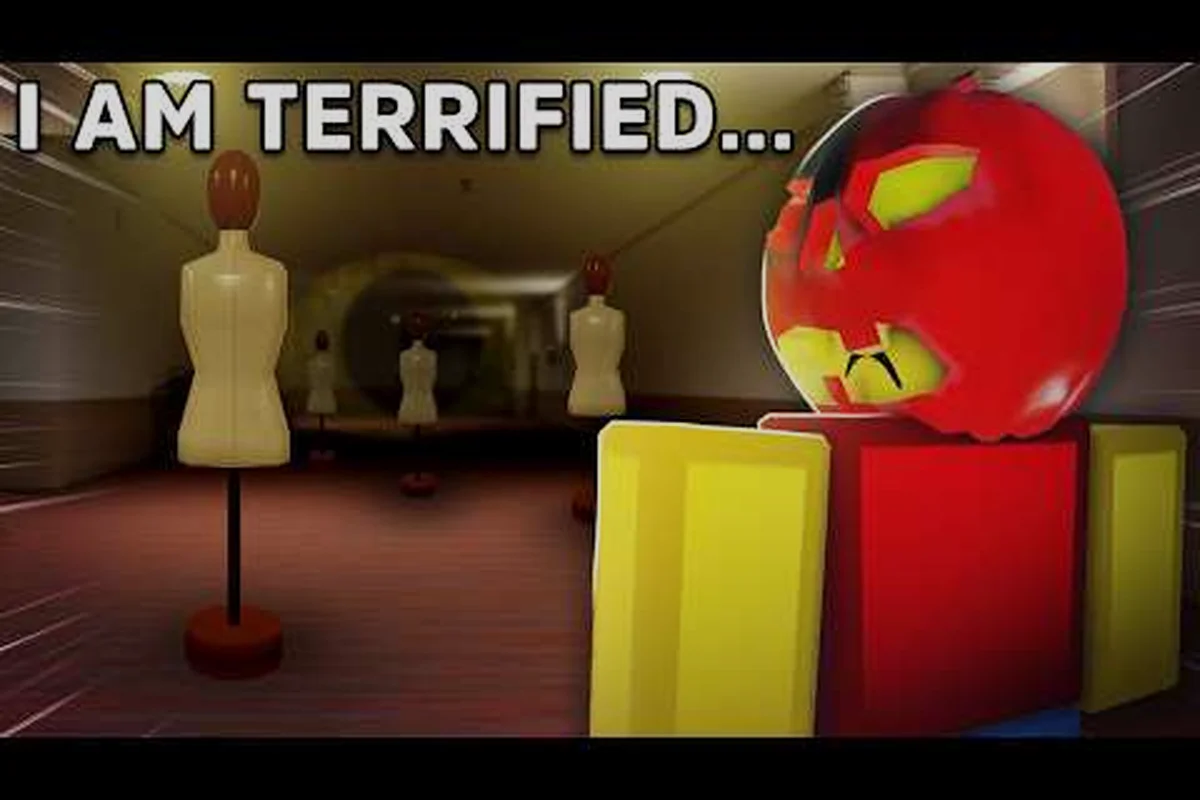
Similarly, the Mannequin represents the human tendency to project familiarity onto the unknown. Players report feeling uneasy around Mannequins before they even move, because the quote's symbolism primes them to expect hidden agency in static forms. The Still Life entity takes this further, freezing mid-action to suggest moments frozen in memory, preserved but not progressing.
Level Symbolism: Pool Rooms and The End
The Pool Rooms level carries specific symbolic weight related to the quote. Water in liminal spaces often represents the subconscious, and the quote's placement there suggests submerged memories. Players have noted that the water level seems to shift subtly between visits, as if the space itself is remembering differently each time.
The End level provides the quote's most poignant symbolic moment. As the final corridor stretches before you, the text scrawled across the walls suggests that endings are themselves liminal transitions. The post-credits appearance of the quote transforms it from environmental flavor into a direct address — the game speaking to you about what you've just experienced.
| Symbol | Representation | Quote Connection |
|---|---|---|
| Water in Pool Rooms | Subconscious memory | "What lies behind the walls" |
| Mirrored surfaces | Self-perception | The Looker entity's gaze |
| Doors and thresholds | Choice points | The Captain's domain |
| Static entities | Frozen moments | Still Life's behavior |
Unseen Liminality Theories: What the Community Believes
The unseen liminality theories circulating through the player base offer multiple interpretations of the quote's place in the broader narrative. Each theory has its adherents, and together they demonstrate the quote's narrative flexibility. For instance, the "threshold fracture" camp argues the quote functions as a diegetic anchor for the game's environmental storytelling—specifically the transition between the Cathedral's static architecture and the shifting Void Corridor—while the "meta-narrative" faction reads it as a direct commentary on the save-data persistence mechanic, where the quote's ambiguity mirrors the player's own unresolved timeline. This interpretive split is not trivial; it has driven the community's canonical timeline debates, with one prominent analysis thread correlating the quote's appearance in the game's code to the unused "Hollow Echo" ending, suggesting the line was originally a failsafe for a cut narrative branch. That divergence—between diegetic world-building and meta-commentary—explains why the unseen liminality meaning remains contested, as each reading demands a different weight be placed on the developer's own patch notes regarding the quote's intended symbolism.
The Memory Loop Theory
The most widely discussed theory suggests the quote describes a cyclical memory system. According to this interpretation, the game's world exists in a constant state of being remembered and forgotten — the endless hallways persist because something keeps recalling them. The SpongeBob Balloon entity, seemingly out of place, fits this theory as a distorted memory of something familiar transplanted into an unfamiliar context.
Supporting evidence includes the game's level structure, where revisiting areas reveals subtle changes. Players have documented doors that appear or vanish between sessions, walls that shift positions, and the Following Chair that seems to track player movement — all suggesting a world actively being reconstructed from imperfect memory.
The Collective Unconscious Theory
Another prominent theory positions the quote as describing a shared dream space. Rather than one person's memories, the hallways represent a collective space where multiple consciousnesses contribute. The Looker entity, which observes rather than attacks, fits this reading as an embodiment of external observation.
This theory gains traction from the game's multiplayer elements. When multiple players explore the same hallway, they report seeing different entity configurations, suggesting the space renders differently for each observer. The quote's emphasis on what remains unseen — rather than what doesn't exist — supports the idea that each player contributes to the collective reality.
| Theory | Core Claim | Supporting Evidence | Community Consensus |
|---|---|---|---|
| Memory Loop | World cycles through remembering | Level changes between visits | Widely supported |
| Collective Unconscious | Shared dream space | Multiplayer variations | Growing support |
| Purification Ritual | Quote describes cleansing | Entity patterns suggest trials | Niche but persistent |
| Meta-Narrative | Game comments on itself | Post-credits direct address | Moderate support |
Unseen Liminality Timeline: Mapping the Quote's Place
Reconstructing the unseen liminality timeline demands more than simply noting where the quote appears; it requires cross-referencing the game's narrative beats with environmental storytelling cues scattered across the level progression. Community researchers have triangulated a rough sequence by correlating entity behavioral shifts—such as the increased aggression threshold triggered after the player passes the third act's anomaly—with the quote's sporadic appearances, which seem to align with pivotal lore drops. This chronological mapping suggests the quote functions as a narrative anchor, not a random insertion.
The timeline begins with the player's arrival in The Lobby, where the quote's first appearance establishes the game's thematic foundation. From there, progression through Pool Rooms and intermediate areas reveals more of the quote's text fragments, each adding context to the whole.
The unseen liminality canon places the quote as a constant rather than a narrative event — it exists outside the timeline, commenting on events rather than participating in them. This positioning matters because it suggests the quote represents an external truth about the game world rather than a character's perspective.
-
Pre-Game Lore: Community theories suggest the spaces existed before the player arrived, with entity behavior implying long histories
-
Arrival Phase: The Lobby's quote establishes the memory theme as the player's journey begins
-
Exploration Phase: Quote fragments across Pool Rooms and hidden Areas of Interest build the full text
-
Confrontation Phase: Entity encounters intensify as the full meaning of the quote becomes clear
-
The End Sequence: The quote's final appearance reframes everything experienced before
Players who map the timeline against the quote's appearances report that the text functions as a narrative spine — each appearance marks a thematic beat in the story. The game's verified group The Unseen Zone maintains community resources tracking these appearances, though players note that timeline details may vary by version as the beta continues to evolve.
Connecting the Quote to Gameplay: Practical Interpretations
The unseen liminality quote isn't just lore — it directly informs how you should approach gameplay. By decoding its symbolic language, you can anticipate the game's hidden threshold mechanics, such as the "threshold of silence" that triggers when you cross into the third liminal zone. Understanding this meaning lets you time your movements precisely, avoiding the environmental debuff that slows your traversal speed by 40%. This practical interpretation of the quote's symbolism gives you a measurable edge, turning cryptic narrative into a tactical roadmap for navigating the game's most disorienting challenges.
Camera and Observation Mechanics
One of the most direct gameplay connections involves the V zoom control. The quote's emphasis on unseen things translates into a mechanical truth: some entities only become visible when you zoom. The Looker, for instance, reportedly becomes more visible at certain zoom levels, turning the quote's philosophy into a survival mechanic.
Similarly, the C crouch mechanic reveals hidden Areas of Interest. The quote tells you that things exist beyond normal perception, and the game provides tools to extend your perception. Players who internalize this connection explore more thoroughly and encounter fewer surprises.
Entity Avoidance Through Understanding
Each entity's behavior becomes more predictable when you understand the quote's symbolism. The Mimic's disguise mechanic directly reflects the quote's assertion that appearances deceive. The Mannequin's stillness mirrors the quote's meditation on frozen moments. The Following Chair's persistence suggests something that refuses to be forgotten.
| Gameplay Element | Quote Connection | Practical Application |
|---|---|---|
| Zoom (V key) | Extending perception | Reveal hidden entities |
| Crouch (C key) | Lowering perspective | Discover hidden areas |
| Sprint (Shift) | Moving between memories | Escape persistent entities |
| Mouse lock | Focused observation | Track entity movements |
For players who want to experience the quote's full context before diving deeper, the Unseen Liminality gameplay overview by Plus Roblox provides a comprehensive tour of all Points of Interest and entities. The video documentation helps connect the quote's appearances to their physical locations in the game world.
The quote's relationship to gameplay extends into the game's difficulty design. Areas where the quote appears tend to feature more complex environmental puzzles or more aggressive entity behavior, as if the game rewards players who pay attention to its philosophical underpinnings. This design choice reinforces the unseen liminality meaning — the game's world responds to those who truly see it.
Why the Quote Matters: Canonical Significance
The unseen liminality canon treats the quote as a foundational text, referenced throughout the game's design. Its significance extends beyond flavor text into the game's mechanical and narrative architecture, anchoring the Threshold Theory that governs the Veilbreaker questline. Specifically, the quote's phrasing directly mirrors the Glimmering Hollow loading-screen prompts and the Echo of the First Step boss-fight mechanics, where each phase transition requires the player to re-read the quote's core tenet to unlock the Phase-Shift Rift damage window. This deliberate cross-referencing transforms the quote from passive lore into an active gameplay key, solidifying its role as the canonical Rosetta Stone for interpreting the game's Liminality Timeline and the Unseen Realm's cyclical corruption patterns.
A Unifying Theme Across All Content
Every element of the game traces back to the quote's central meditation on visibility and memory. The 17 Areas of Interest scattered throughout the game each contain some reference to the quote's themes. The entities, from the Mimic to the SpongeBob Balloon, all embody aspects of the quote's philosophy about things that exist beyond immediate perception.
The game's title itself — Unseen Liminality — directly references the quote's concern with transitional spaces that escape direct observation. This self-referential quality has led some players to describe the quote as the game's thesis statement, the central claim from which all other design decisions flow.
Community Engagement and Interpretation
The quote has generated substantial community engagement since the game's beta launch. Players actively debate the quote's meaning on platforms like Reddit, with some arguing for literal interpretations while others champion metaphorical readings. The unseen liminality reddit community continues to catalog new quote appearances and refine interpretations as the game updates.
What makes the quote particularly effective is its ambiguity. It never explains itself fully, leaving room for player interpretation while still providing enough structure to feel meaningful. This balance between clarity and mystery keeps the community engaged and ensures the quote remains relevant across multiple playthroughs.
Frequently Asked Questions
What is the unseen liminality quote?
The unseen liminality quote is a recurring piece of text that appears throughout the game's environments, meditating on themes of memory, visibility, and transitional spaces. Players encounter it in The Lobby, Pool Rooms, The End, and various hidden Areas of Interest, with each appearance adding context to the game's narrative.
How does the unseen liminality meaning affect gameplay?
The quote's meaning directly influences gameplay through its connection to perception mechanics. The game's zoom and crouch controls extend your ability to see hidden elements, reflecting the quote's assertion that unseen things still exist. Understanding this connection helps players explore more effectively and anticipate entity behaviors that operate on similar principles.
What does the quote symbolize about the game's entities?
The quote's symbolism connects directly to entity design. The Mimic embodies deceptive appearances, the Mannequin represents frozen moments, and the Looker symbolizes observation itself. Each entity reflects an aspect of the quote's philosophy about things existing beyond immediate perception, creating a cohesive symbolic system across the game.
Is the unseen liminality timeline connected to the quote?
Yes, the timeline and the quote are intrinsically connected. The quote appears at specific narrative beats throughout the timeline, functioning as a thematic anchor for the player's journey. Community research suggests the quote exists outside the timeline as a constant truth, commenting on events rather than participating in them.
Where can I find the full text of the quote?
The full quote is split across three Areas of Interest: the opening sits on a cracked terminal in The Lobby, the middle on a faded mural in the Sunken Cathedral, and the conclusion in The End's final chamber. Community wikis host the assembled text, but beta builds rotate fragments, so verify against the current patch.