
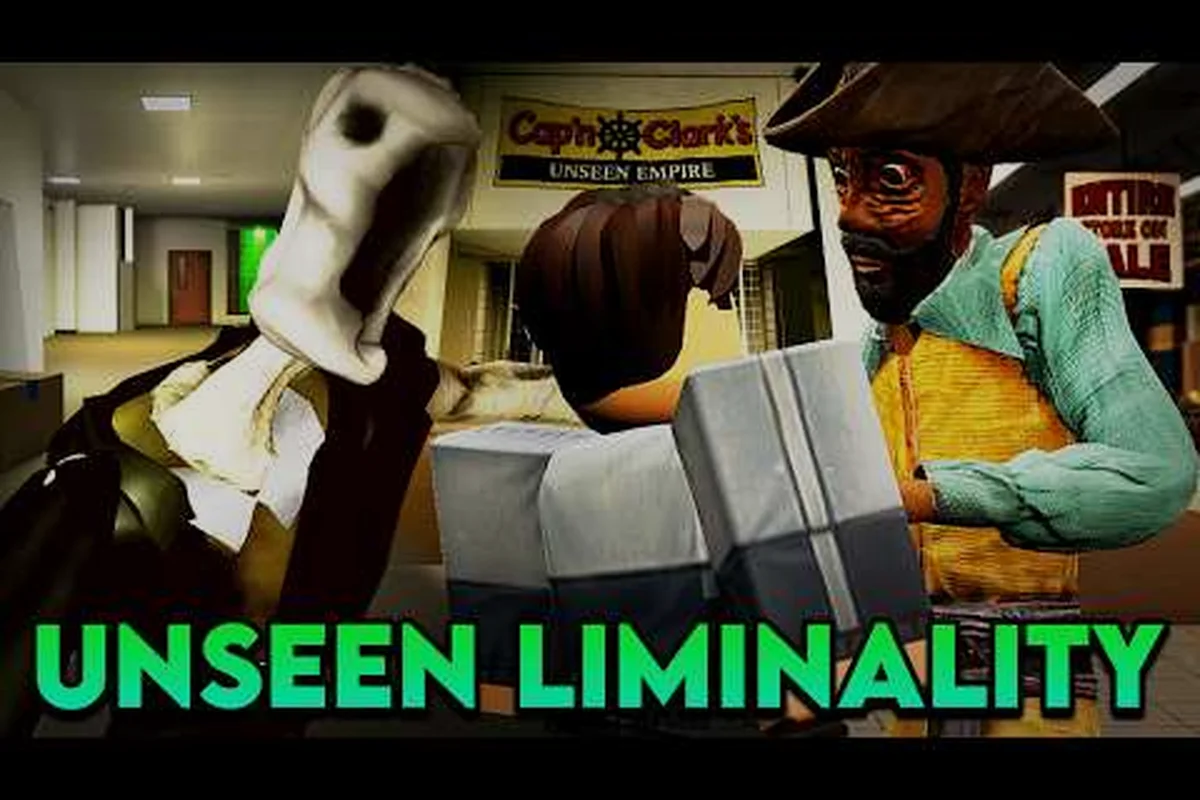
Unseen Liminality The Lobby lore runs deeper than most players realize, because the game's official description frames the entire experience around a single haunting concept: "Explore what is remembered in the endless hallways of this liminal setting and discover what lies behind the walls." That phrasing isn't flavor text — it's the key to understanding why The Lobby feels the way it does, and why the pool rooms echo with something that feels almost like recognition. The memory theme isn't a backdrop; it's the engine driving every environmental detail, every entity behavior, and every hidden corner you'll ever stumble into. Understanding this changes how you explore, because once you know what the game is actually trying to remember, the spaces stop feeling random and start feeling deliberate.
The community has spent months piecing together what the game's memory system means, and the emerging picture is both fascinating and unsettling. According to player reports and the official Roblox game page, the game draws direct inspiration from Beyond Liminal, but it twists that foundation into something more personal. Where other liminal space games focus on the fear of empty places, Unseen Liminality asks a different question: what happens when a place starts remembering the people who left? The Lobby, with its worn carpet and flickering lights, isn't just a starting area — it's the first memory fragment, the one that sets the tone for everything that follows.
The Lobby as the First Memory Fragment
The Lobby functions as the game's opening statement, and its design tells a specific story about what the game considers important. Unlike the sterile, generic hallways found in many liminal space games, The Lobby carries visible signs of habitation — scuff marks on the walls, slightly misaligned ceiling tiles, and furniture arranged as if someone just stepped away. These details aren't accidental; they're the game's way of establishing that the memory theme operates on a personal level, not just an architectural one. The space feels recently abandoned rather than eternally empty, which creates a different kind of dread than pure emptiness.
What makes The Lobby particularly interesting from a lore perspective is how it establishes the game's core mechanic of the more it remembers. As you explore, the environment subtly shifts — a door that was closed now stands open, a light that was flickering now burns steady, a sound that seemed distant now feels closer. Players have documented these changes extensively, and the pattern suggests the game is actively tracking your movements and adjusting the space in response. This isn't just atmospheric dressing; it's the game's way of showing that the memory isn't static. The Lobby remembers you, just as it remembers everyone who passed through before.
The transition from The Lobby to the pool rooms marks a significant shift in the game's memory narrative. Where The Lobby feels like a public space — a threshold, a waiting area — the pool rooms feel intimate and almost private. The water, the echoes, the distinctive acoustics — everything about the pool rooms suggests a space that holds different kinds of memories than the lobby. According to community analysis of the Unseen Liminality Wiki, the pool rooms contain some of the game's most emotionally charged environmental storytelling, with details that players believe reference specific memory types.
Environmental Storytelling Through Abandoned Objects
The objects scattered throughout The Lobby tell a fragmented story that players have been piecing together since the beta launched. A single shoe near the reception desk, a half-empty coffee cup on a side table, a newspaper dated with an unreadable headline — each item feels placed with intention, as if the game is asking you to reconstruct what happened here. The community's consensus is that these objects represent forgotten memories — the small, mundane details that people leave behind when they move on, and that spaces hold onto long after their owners have gone.
What's particularly clever about the game's approach is how it uses these objects to teach players about the memory system without ever explaining it directly. The first time you notice that the coffee cup has moved between visits, or that the shoe has been joined by a second one, the game has already communicated its core mechanic: the more it remembers, the more the space changes. This environmental storytelling approach means that even players who never read the game's description or engage with the community lore will still experience the memory theme on a visceral level.
The Lobby's Connection to the Pool Rooms
The relationship between The Lobby and the pool rooms is one of the most discussed topics in unseen liminality fan theories lore, and for good reason. The two spaces feel connected in ways that go beyond simple level progression, with visual motifs that repeat across both areas — the same tile pattern appears in both locations, the same color palette dominates, and the same sense of recent abandonment pervades both spaces. Players have theorized that the pool rooms represent a different type of memory than The Lobby, perhaps a more personal or emotional one.
The game reinforces this connection through its entity design. Several entities appear in both areas, but their behavior shifts subtly depending on which space you encounter them in. A Mimic in The Lobby behaves differently than a Mimic in the pool rooms, and players have documented these behavioral differences extensively. This suggests that the entities themselves are tied to the memory system — they're not just threats to be avoided, but manifestations of the spaces' memories, acting out patterns that were established long before you arrived.
The Memory Mechanic and the More It Remembers
The game's central memory mechanic is best understood through the phrase the more it remembers, which appears throughout the community's discussions of the game's lore. The concept is simple but powerful: the longer you spend in a space, the more the space remembers you, and the more it changes in response. This manifests in several observable ways, from environmental shifts to entity behavior changes, and it fundamentally alters how players approach exploration.
The mechanic creates a tension between thorough exploration and survival, because spending too long in one area can trigger more aggressive entity behavior. According to player testing, the game tracks your time in each area and adjusts the threat level accordingly — stay too long, and you'll start seeing more entities, more frequently, and with more unpredictable patterns. This creates a natural pressure to keep moving, which in turn shapes how players experience the memory theme. You're not just exploring a space; you're interacting with it, and it's responding to you.
| Memory Stage | Environmental Changes | Entity Behavior | Player Experience |
|---|---|---|---|
| Initial Entry | Standard layout, minimal anomalies | Entities follow predictable patrol routes | Safe exploration, learning the space |
| Extended Stay | Doors shift, lights flicker, objects move | Entities become more aggressive and unpredictable | Heightened tension, careful movement |
| Prolonged Exposure | Layout begins to repeat or loop | Multiple entities can spawn simultaneously | Survival becomes the primary focus |
| Memory Saturation | Space feels "wrong" — distorted geometry | Entities appear to hunt with purpose | Immediate extraction becomes necessary |
The table above represents the community's best understanding of how the memory mechanic scales, based on extensive testing documented in the full walkthrough video by Plus Roblox. The progression isn't linear — players report that the stages can vary based on their actions, with some activities accelerating the memory process faster than others. Sprinting, for example, seems to draw more attention than walking, and interacting with objects appears to trigger more significant environmental responses.
How Forgotten Memories Shape Level Design
The concept of unseen liminality forgotten memories extends beyond simple environmental storytelling into the very structure of the game's levels. Each area is designed to feel like a memory that's been partially erased — familiar enough to recognize, but with details that don't quite add up. Doorways lead to rooms that shouldn't exist, hallways double back on themselves, and spaces that should connect to each other instead dead-end into walls. This isn't sloppy level design; it's intentional, and it reflects how memories actually work.
The game's approach to level design mirrors the way human memory operates, with certain details preserved in sharp clarity while others fade into obscurity. The Lobby's reception desk is rendered with remarkable detail, while the hallway leading to it feels generic and unfinished. The pool rooms' water is almost photorealistic, but the walls surrounding it are flat and textureless. These contrasts aren't inconsistencies — they're the game's way of showing you what the space remembers clearly and what it has forgotten.
The Timeline Explained Through Environmental Clues
One of the most active areas of unseen liminality fan theories lore involves reconstructing the game's timeline through environmental clues. Players have documented dozens of details that suggest a specific sequence of events, and the community has developed several competing theories about what actually happened in these spaces. The newspaper dates, the style of the furniture, the technology visible in the environment — all of these details point to a specific era, and the community has narrowed it down to roughly the late 1990s or early 2000s.
The unseen liminality timeline explained through these clues suggests a narrative of gradual abandonment. The Lobby shows signs of a functioning space — operational lighting, organized furniture, clean floors — while the pool rooms show signs of more recent neglect. This has led to theories that the pool rooms represent a later period in the space's history, perhaps after the building was officially closed but before it was completely forgotten. The entities, in this reading, are manifestations of the space's lingering memories, acting out the routines of the people who once occupied it.
The Pool Rooms Lore and Deeper Memory Layers
The pool rooms represent the game's most complex lore environment, and unseen liminality pool rooms lore has become a significant focus of community research. Unlike The Lobby, which feels like a public threshold, the pool rooms feel like a space of personal significance — a place where individual memories might be stored rather than collective ones. The water, the echoes, the distinctive smell that players describe but can't quite identify — everything about the pool rooms suggests a different kind of memory than what The Lobby holds.
The pool rooms' connection to the game's memory theme becomes most apparent through the entity encounters that occur there. Several entities appear exclusively in the pool rooms, and their behaviors seem to reference specific memory types. The Still Life entity, for example, appears to freeze time in a way that suggests a memory being preserved, while the Mannequin seems to represent memories that have been emptied of their original meaning. These interpretations are speculative, but they're supported by the entities' behaviors and the contexts in which they appear.
| Entity | Primary Location | Memory Association | Behavioral Pattern |
|---|---|---|---|
| Mimic | The Lobby, Pool Rooms | Adaptive memory | Copies player movements before attacking |
| Still Life | Pool Rooms | Preserved memory | Freezes nearby objects and players |
| The Captain | Pool Rooms | Authoritative memory | Patrols specific routes with purpose |
| Mannequin | Pool Rooms | Empty memory | Stands motionless until approached |
| Looker | The Lobby, Hallways | Observational memory | Watches from a distance, rarely approaches |
The table above represents the community's current understanding of how entities connect to the memory theme, based on data compiled from the community wiki. The connections aren't explicit — the game never tells you what the entities represent — but the behavioral patterns are consistent enough that the community has reached a rough consensus on their meanings.
The Memory of Water: Pool Rooms Symbolism
The pool rooms' most distinctive feature — the water — carries significant symbolic weight in the game's memory narrative. Water has long been associated with memory in human culture, from the River Lethe in Greek mythology to modern neuroscience's understanding of the brain's fluid dynamics. The game leans into this symbolism heavily, with the pool rooms' water behaving in ways that suggest it's not just water but something more — a medium for storing and transmitting memories.
Players have documented strange occurrences involving the water that suggest it's actively involved in the memory mechanic. Reflections in the water sometimes show things that aren't in the room, sounds seem to travel differently through the water than through the air, and the water level appears to change subtly between visits. These details have led to theories that the pool rooms' water is the game's primary memory storage medium, with each ripple representing a memory being accessed or altered.
The Lobby's Role in the Broader Narrative
While the pool rooms get most of the lore attention, The Lobby plays a crucial role in the game's overall narrative structure. It's the first space players encounter, which means it establishes the rules of the memory mechanic before the game introduces more complex concepts. The Lobby teaches players that spaces remember, that objects can move, and that the environment responds to presence — all lessons that become critical in the pool rooms.
The Lobby also serves as a narrative anchor, providing a familiar reference point as players progress through more disorienting spaces. When the pool rooms become too strange, too alien, The Lobby's worn carpet and flickering lights offer a sense of grounding. This isn't just a gameplay convenience; it's a narrative device that reinforces the memory theme. The Lobby is the memory that stays clear, the one that anchors all the others.
Fan Theories and Community Interpretations
The unseen liminality fan theories lore community has produced an impressive body of interpretation since the game's beta launch, and several theories have gained significant traction. The most prominent theory suggests that the entire game takes place inside a single memory — that The Lobby, the pool rooms, and all the spaces between them are fragments of one person's experience, being replayed and examined from different angles. This theory is supported by the game's recurring motifs and the way certain details echo across different areas.
Another popular theory posits that the player character is not an explorer entering these spaces but a memory itself, being examined by whatever force maintains the space. This reading explains the game's strange relationship with the player — the way entities sometimes seem to recognize you, the way the environment responds to your presence, the way the game feels less like exploration and more like being studied. It's an unsettling interpretation, but it fits the evidence.
| Theory | Core Claim | Supporting Evidence | Community Consensus |
|---|---|---|---|
| Single Memory Theory | All areas are fragments of one person's memory | Recurring motifs, echoing details | Widely supported |
| Player as Memory | The player is a memory being examined | Entity recognition behaviors | Growing support |
| Cycle Theory | The game repeats a fixed cycle of events | Environmental resets between visits | Mixed support |
| Collective Memory Theory | The spaces hold many people's memories | Variety of objects and details | Moderate support |
The table above summarizes the four main theories currently circulating in the community, based on discussions documented in player forums and the community wiki. None of these theories has been confirmed by the developer, and the game's ambiguity is likely intentional — the experience of interpreting the lore is part of the experience itself.
The More It Remembers: A Deeper Reading
The phrase the more it remembers has become central to the community's understanding of the game, and it's worth examining more closely. The phrase suggests a progressive process — the more the space remembers, the more it changes, the more it becomes something different from what it was. This reading transforms the game from a simple exploration experience into something more complex: a meditation on how memory changes the spaces we inhabit.
The game's implementation of this concept is subtle but effective. The changes aren't dramatic — a door that was open is now closed, a light that was on is now off, a sound that was distant is now close — but they accumulate over time. Players who return to areas they've already explored often find them subtly different, and these differences create a sense of unease that's hard to shake. The space isn't just remembering you; it's becoming something new because of you.
What Lies Behind the Walls
The game's official description mentions discovering "what lies behind the walls", and this phrase has become a focal point for lore investigation. Players have documented numerous instances of sounds coming from behind walls, doors that shouldn't exist, and passageways that appear and disappear between visits. The community's consensus is that the walls conceal something significant — possibly the source of the memory mechanic, possibly the entities themselves, possibly something else entirely.
The hidden hallway guide documents one of the most significant discoveries related to this mystery, revealing a passage that connects The Lobby to a space that doesn't appear on any map. The existence of this hidden space suggests that the game's world is larger than it initially appears, and that the memory mechanic might be hiding more than it reveals. What lies behind the walls might be the key to understanding the entire game.
Practical Lore Exploration Tips
Understanding the lore isn't just an intellectual exercise — it changes how you play the game. Players who approach the game with the memory theme in mind report significantly different experiences than those who treat it as a pure survival game. The following tips represent the community's best advice for lore-focused exploration, compiled from extensive player testing and documented in the walkthrough part 2 guide.
Slow down and observe — The game rewards patience, and rushing through areas means missing the environmental details that tell the story. Take time to examine objects, read signs, and note the positions of furniture. The game's memory mechanic means that details change between visits, so what you see on your first pass might not be there on your second.
Document everything — The community's understanding of the lore has been built through collective documentation, and individual players have made significant contributions by recording their observations. Screenshots, video recordings, and written notes all help build the picture. If you notice something strange, record it — it might be the clue that cracks the whole mystery.
Compare visits — Because the game's spaces change between visits, comparing your experiences across multiple playthroughs can reveal patterns that aren't visible in a single session. What moved? What changed? What stayed the same? These comparisons have been the source of several major lore discoveries.
Engage with the community — The lore community is active and welcoming, and sharing your observations can help others make connections you might have missed. The community wiki is a good starting point, but player forums and Discord servers are where the most detailed discussions happen.
Check the lobby guide — The Lobby contains more lore details than most players realize, and a thorough exploration guide can help you find details you might have missed. The guide covers both the practical layout and the environmental storytelling details that are easy to overlook.
Recommended Exploration Route for Lore Players
For players who want to experience the game's lore in a structured way, the community has developed a recommended exploration route that maximizes lore discovery while minimizing entity encounters. This route prioritizes areas with high environmental storytelling density and avoids areas where entity encounters are likely to interrupt your observation.
| Route Segment | Focus | Key Details | Recommended Time |
|---|---|---|---|
| Lobby Perimeter | Environmental details | Objects, signs, furniture positions | 10-15 minutes |
| Lobby Interior | Memory mechanic observation | Door states, light patterns, sound changes | 15-20 minutes |
| Transition Hallway | Connection details | Motifs shared between areas | 5-10 minutes |
| Pool Rooms Entry | Initial impressions | Water behavior, acoustic details | 10-15 minutes |
| Pool Rooms Deep | Entity observation | Entity behaviors, memory associations | 15-20 minutes |
The route above represents the community's current best practice for lore-focused exploration, based on extensive testing documented in player forums. The times are flexible — some players prefer to move faster, while others spend significantly longer in each area. The key is to maintain awareness of the memory mechanic and to document changes between visits.
Frequently Asked Questions
What is the main theme of Unseen Liminality The Lobby lore?
The main theme is memory — specifically, how spaces remember the people who occupied them and how those memories manifest as environmental changes and entity behaviors. The Lobby establishes this theme through its design, and the pool rooms develop it further with more complex memory associations.
How does the memory mechanic affect gameplay?
The memory mechanic creates a tension between thorough exploration and survival, because spending too long in one area triggers more aggressive entity behavior. The longer you stay, the more the space changes, and the more dangerous it becomes. This pressure shapes how players approach exploration and creates a sense of urgency that reinforces the memory theme.
What are the most popular fan theories about the game's lore?
The most popular theories include the Single Memory Theory, which suggests all areas are fragments of one person's memory, and the Player as Memory theory, which posits that the player character is a memory being examined. Both theories have significant community support, though neither has been confirmed by the developer.
How does the timeline of the game's events work?
The timeline is reconstructed through environmental clues, with the community narrowing the game's setting to roughly the late 1990s or early 2000s. The Lobby shows signs of a functioning space, while the pool rooms show signs of more recent neglect, suggesting a narrative of gradual abandonment.
Where can I find more information about the game's lore?
The community wiki and official Roblox page cover basics, but the deepest Unseen Liminality lore—like The Lobby’s fractured memories and the pool rooms’ echoes—lives in Discord theories. Players there dissect every visual clue, piecing together what these spaces forgot. Your observations could crack the next mystery.